Most of us know a “fixer.” That person who manages every crisis, absorbs everyone’s stress, and treats their own emotional needs as a luxury they simply cannot afford. It is a taxing way to live, often masking a deep-seated fear that if they stop holding everything together, the entire structure of their life will collapse.
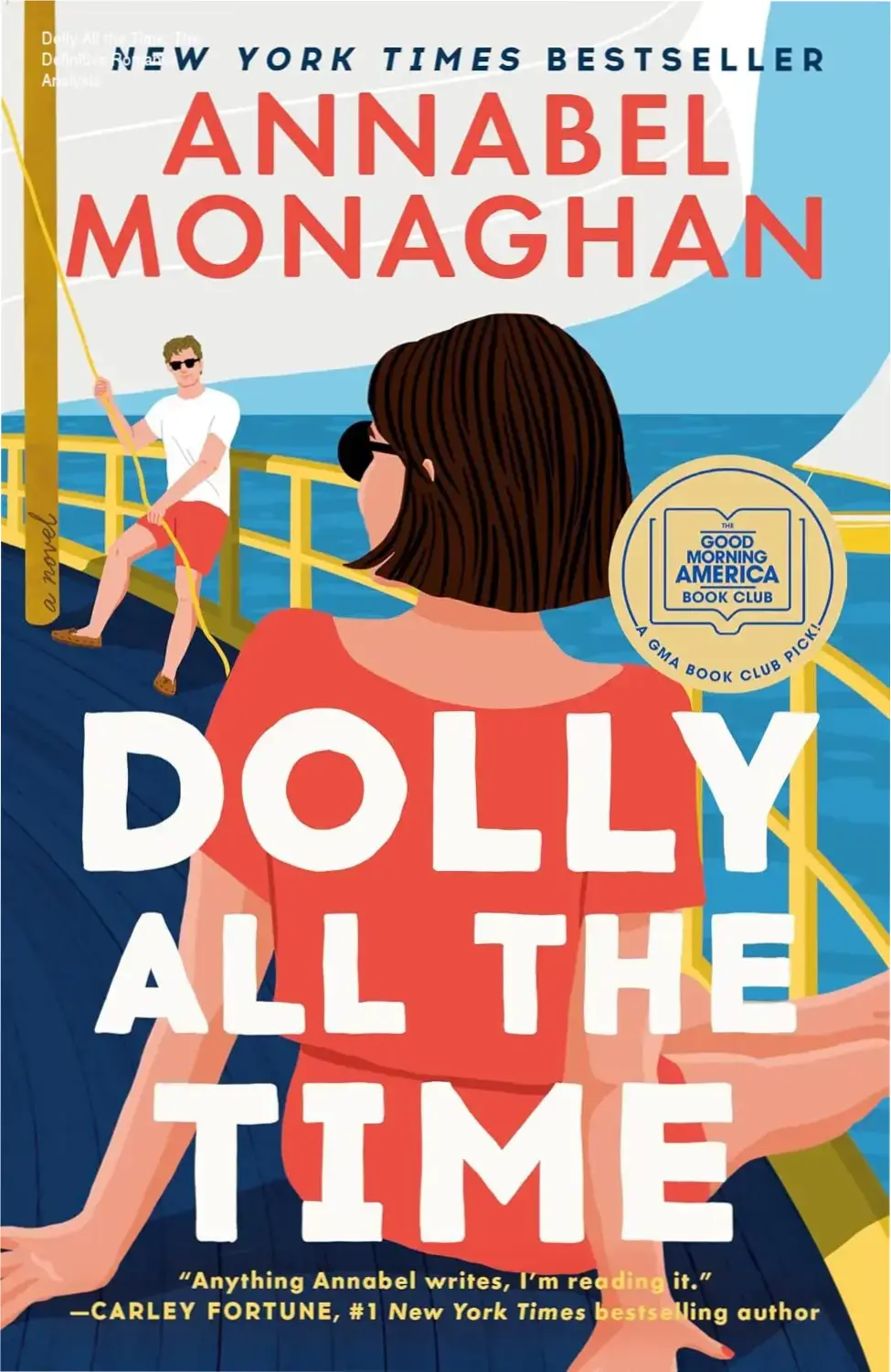
Annabel Monaghan taps into this specific psychological exhaustion in Dolly All the Time. By blending the high-stakes tension of losing a family home with the artificiality of a “fake dating” arrangement, she explores whether a person defined by self-reliance can actually survive the vulnerability of being seen. If you are curious about how this narrative balances trope and truth, you can check the current reader reception and availability here.
Ready to dive into “Dolly All the Time”?
Explore available editions, check current live pricing, or download a free sample directly on Amazon.
Preview Free Sample & Check Price on Amazon
*You will be redirected to Amazon. As an Amazon Associate, we may earn from qualifying purchases.
The Mechanics of the “Fake Dating” Trope: Cliché or Catalyst?
Let’s be honest: the “fake dating” plot is the sourdough starter of contemporary romance. It’s everywhere. On paper, the premise of Dolly Brick and Stewart Whitfield pretending to be a couple to navigate high-society expectations is predictable.
However, Monaghan avoids the usual pitfalls by anchoring the artifice in genuine desperation. Dolly isn’t doing this for a promotion or to spite an ex; she is fighting to save her family’s home in Rhode Island. The stakes are material, not just social.
This shift changes the energy of the book. The “fake” relationship becomes a safe laboratory where two workaholics—one by necessity, one by privilege—can experiment with intimacy without the immediate risk of total failure.
The tension doesn’t come from “will they or won’t they,” but rather from “when will the mask slip?” The writing treats the romance as a byproduct of character growth rather than the sole purpose of the plot.
| Element | Traditional Romance Approach | Monaghan’s Execution |
|---|---|---|
| The Conflict | Misunderstandings and jealousy. | Internal struggle with dependency and duty. |
| The Pace | Rapid escalation to passion. | A slow burn that mirrors emotional trust. |
| The Setting | Generic backdrop. | Atmospheric Rhode Island that feels like a character. |
Writing Style: The “Ghost Pepper” Effect
Monaghan’s prose is deceptively light. She uses a conversational rhythm that makes the 400 pages fly by, but she punctuates the narrative with sharp, visceral descriptions. She describes chemistry as hitting the bloodstream “like a ghost pepper.”
This choice is telling. A ghost pepper isn’t just hot; it’s a delayed burn. It lingers. This mirrors the relationship between Dolly and Stewart—a slow accumulation of heat that eventually becomes impossible to ignore.
The pacing is deliberate. She spends significant time on the “small” moments: the sunset boat rides, the public dinners, the quiet realizations. This prevents the story from feeling like a checklist of romance beats.
Critics and readers on Goodreads often highlight this “luminous” quality. The book manages to be “cozy” without being saccharine, maintaining a level of skepticism and grit that reflects Dolly’s own worldview.
The Psychology of the “Strong Woman” Archetype
Dolly Brick is a classic example of the hyper-independent woman. Abandoned by her mother at twelve, she learned early that the only reliable safety net is the one she weaves herself.
The narrative arc isn’t just about finding a partner; it’s about the terrifying process of delegating control. For Dolly, relying on Stewart isn’t a romantic gesture—it’s a psychological risk.
Stewart, the “wealthy scion,” serves as the perfect foil. While he has the financial resources Dolly lacks, he is equally trapped by his own expectations and the crushing weight of his family name.
Who This Book Is Actually For
Dolly All the Time isn’t for the reader seeking a groundbreaking plot twist or a high-concept literary experiment. It is, however, a precision-engineered piece of contemporary romance.
The ideal reader is someone who finds comfort in familiar tropes—specifically the “fake dating” and “opposites attract” dynamics—but wants them executed with a higher level of emotional maturity than your average airport novel.
If you enjoy the tension of a slow burn set against a coastal backdrop, the chemistry between Dolly and Stewart will hit the mark. It appeals to those who value character growth over plot velocity.
Who Should Probably Skip It
Avoid this book if you are experiencing “trope fatigue.” If the idea of a wealthy scion and a hardworking woman pretending to date feels like a recycled script, you won’t find enough deviation here to change your mind.
Additionally, readers who prefer fast-paced, plot-driven narratives may find the 400-page length slightly indulgent. The pacing favors atmosphere and internal monologue over rapid-fire action.
Value Analysis: Is It Worth the Read?
From a “value for money” perspective, you are paying for escapism and emotional resonance. Annabel Monaghan delivers a polished, luminous prose style that elevates the story above generic romance.
The “danger” here is expecting a quick, breezy novella. This is a fuller narrative that explores duty, familial abandonment, and the friction of class differences. You get a complete emotional arc, but it requires a commitment to the slow-build tension.
Quick Verdict FAQ
- Is it too predictable? Yes, but the satisfaction comes from how the characters get to the destination, not the destination itself.
- Is the “Single Mom” aspect handled well? Yes. It adds a layer of stakes and realism that prevents the story from becoming too saccharine.
- How is the pacing? Deliberate. It mirrors a summer season—starting slow and heating up toward the end.
Ultimately, it is a safe, high-quality bet for fans of the GMA Book Club. It doesn’t reinvent the wheel, but it polishes it to a mirror finish. To see if the current pricing fits your budget or to browse real-time reader feedback, you can check the latest offers on Amazon.
Final Editorial Verdict
“Dolly All the Time” delivers on its core promise for its intended audience, offering compelling insights without fluff. As highlighted in our detailed edition breakdown, its practical depth and readability are its greatest strengths.
We also recommend checking the official Kindle sample and reader ratings before making your final purchase decision.
*You will be redirected to Amazon. As an Amazon Associate, we earn from qualifying purchases.