
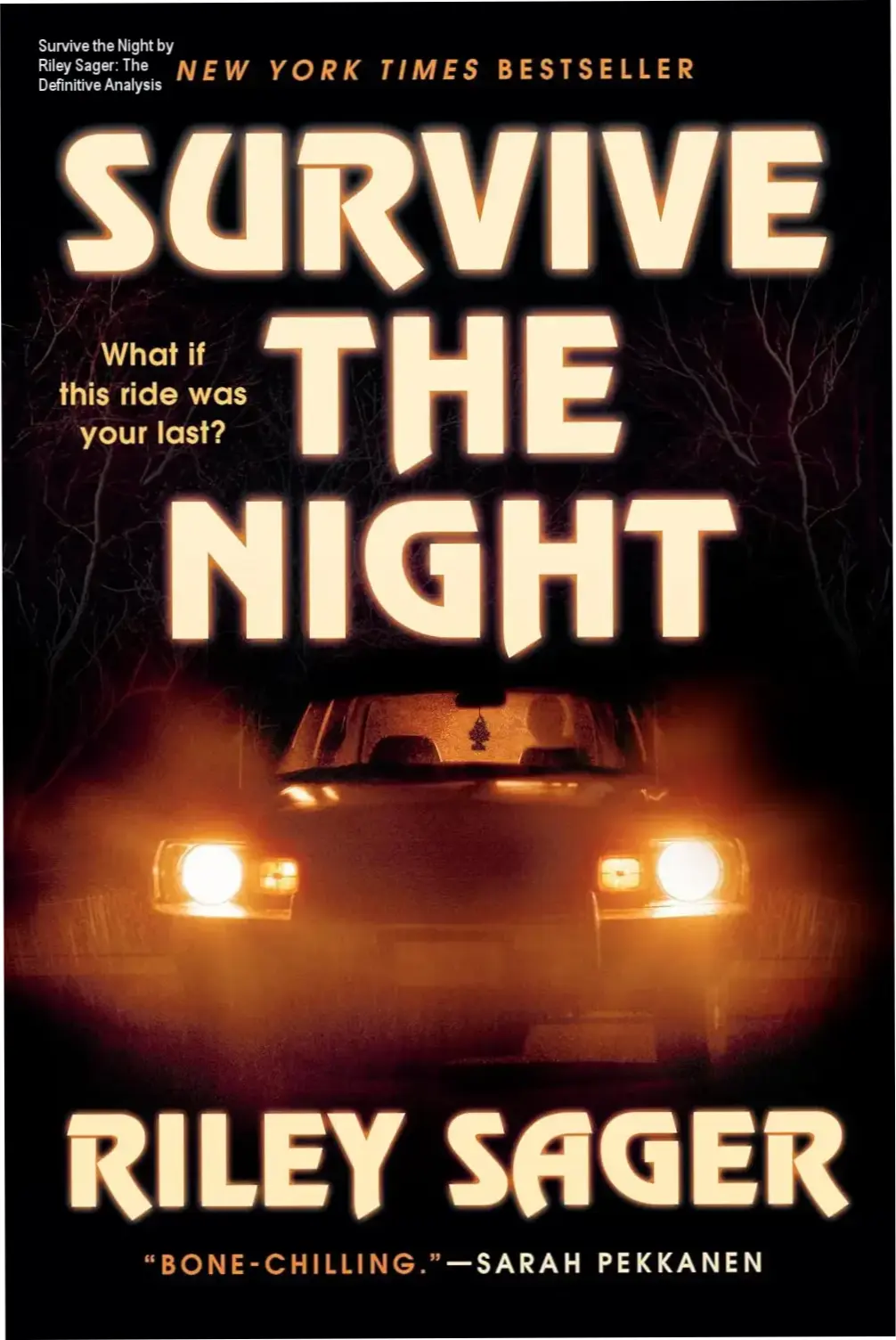
There is a primal, cold anxiety that comes with realizing you are trapped in a confined space with a stranger who might be a monster. We’ve all felt that flicker of doubt during a ride-share or a late-night commute, wondering if the person behind the wheel is actually who they claim to be.
Riley Sager leans heavily into this claustrophobia in Survive the Night, stripping away the safety net of modern technology to amplify the dread. If you want to see how the market has reacted to this high-tension premise, you can check the current reader reception and availability here.
Ready to dive into “Survive the Night”?
Explore available editions, check current live pricing, or download a free sample directly on Amazon.
Preview Free Sample & Check Price on Amazon
*You will be redirected to Amazon. As an Amazon Associate, we may earn from qualifying purchases.
The “Locked Room” on Wheels: Pacing and Tension
Sager essentially creates a “locked room” mystery, but instead of a manor, the setting is a car on a desolate highway in 1991. This choice is a masterstroke in pacing.
The narrative doesn’t waste time. We are thrown immediately into the friction between Charlie and Josh. The tension is an escalating slope of suspicion.
One minute it’s a slightly awkward conversation about a sick father; the next, it’s the terrifying realization that the trunk is off-limits.
The pacing mimics a panic attack. Short chapters and rapid-fire dialogue keep the reader in a state of perpetual instability, mirroring Charlie’s own psychological state.
The Meta-Narrative: Movie Tropes as a Weapon
Charlie Jordan isn’t just a victim; she’s a cinema obsessive. This is where Sager gets clever and a bit skeptical of the genre itself.
Charlie analyzes her own life through the lens of thriller movies. She identifies “red flags” based on cinematic clichés, which creates a layer of meta-commentary.
As a reader, you start questioning if the “clues” are actually evidence of a crime or just a girl projecting her movie knowledge onto a stressful situation.
This psychological tug-of-war is the core of the book’s value. It forces you to decide if you trust the narrator’s intuition or her obsession.
| Technical Element | Execution | Impact on Reader |
|---|---|---|
| Setting | November 1991 (Pre-Cellphones) | Maximum isolation and helplessness |
| POV | Tight Third Person (Charlie) | Intense claustrophobia and bias |
| Plot Device | The “Campus Killer” Backstory | Immediate emotional stakes and guilt |
| Pacing | Accelerated/Linear | High “page-turner” velocity |
Expectation vs. Reality: The Sager Twist
If you’ve read Riley Sager before, you know the “Sager Twist” is the main event. Readers go into this book expecting a complete structural upheaval.
On Goodreads, the divide is clear. Some readers praise the shock value, while others find his twists becoming a predictable formula.
In Survive the Night, the twist relies on the manipulation of time and perception. It’s a gamble that doesn’t land for everyone.
Skeptically speaking, the resolution can feel like a “gotcha” moment rather than a natural conclusion. However, the journey to that point is undeniably gripping.
“The real horror isn’t just the possibility of a killer in the driver’s seat, but the realization that your own mind can be your worst enemy when fear takes over.”
The 1991 Aesthetic: More Than Just Nostalgia
The setting isn’t just for the “Nirvana in the tape deck” vibe. It is a critical plot engine.
In 2024, this story would be impossible. A quick text to a friend or a GPS location share would kill the tension in five minutes.
By stripping away the smartphone, Sager restores the “pure” thriller experience. You are trapped with the character’s limited knowledge.
The neon-lit parking lots and empty highways create a liminal space that feels disconnected from the rest of the world,
Who This Book Is Actually For
Survive the Night isn’t a literary masterpiece; it’s a cinematic experience on paper. If you enjoy the “closed-room” mystery trope—where the tension comes from being trapped in a confined space with a potential predator—this is your territory.
The ideal reader is someone who appreciates 90s nostalgia (Nirvana, no cell phones, analog maps) and prefers a fast, heart-pounding pace over slow-burn character development. It’s perfect for those who treat thrillers like popcorn movies: high entertainment, calculated scares, and a plot designed to keep you turning pages until 3 AM.
Who Should Probably Skip It
You should steer clear of this novel if you have a low tolerance for “unreliable narrator” tropes or if you find movie-obsessed protagonists cliché. Sager leans heavily into Charlie’s cinema knowledge to drive the plot, which can feel repetitive or contrived to a skeptical reader.
Additionally, if you demand a complex, multi-layered mystery with a “perfect” logical resolution, you might find the ending more satisfying as a plot twist than as a cohesive piece of detective work. Hardcore crime aficionados may find the psychological gymnastics a bit too convenient.
Value for Money: The Analytical Trade-off
From a cost-benefit perspective, the value here is purely experiential. You aren’t paying for deep philosophical insights or groundbreaking prose. You are paying for a high-tension ride that delivers exactly what the cover promises: a claustrophobic game of cat and mouse.
The common purchasing mistake is expecting a gritty, realistic crime procedural. This is a psychological thriller. It prioritizes atmosphere and “the reveal” over forensic accuracy.
Quick Verdict FAQ
- Is it a quick read? Yes. The limited setting and urgent stakes make it move significantly faster than a standard mystery.
- Does the 90s setting matter? Absolutely. The lack of GPS and mobile phones is the only reason the plot works.
- Is it too predictable? For seasoned thriller readers, some beats are visible, but the execution remains gripping.
Ultimately, Riley Sager delivers a polished, high-tension narrative that excels in mood and pacing. If you want a book that mimics the feeling of a high-budget suspense film, it’s a solid investment. You can verify the latest reader ratings and current pricing through the official Amazon listing.
Final Editorial Verdict
“Survive the Night” delivers on its core promise for its intended audience, offering compelling insights without fluff. As highlighted in our detailed edition breakdown, its practical depth and readability are its greatest strengths.
We also recommend checking the official Kindle sample and reader ratings before making your final purchase decision.
*You will be redirected to Amazon. As an Amazon Associate, we earn from qualifying purchases.
