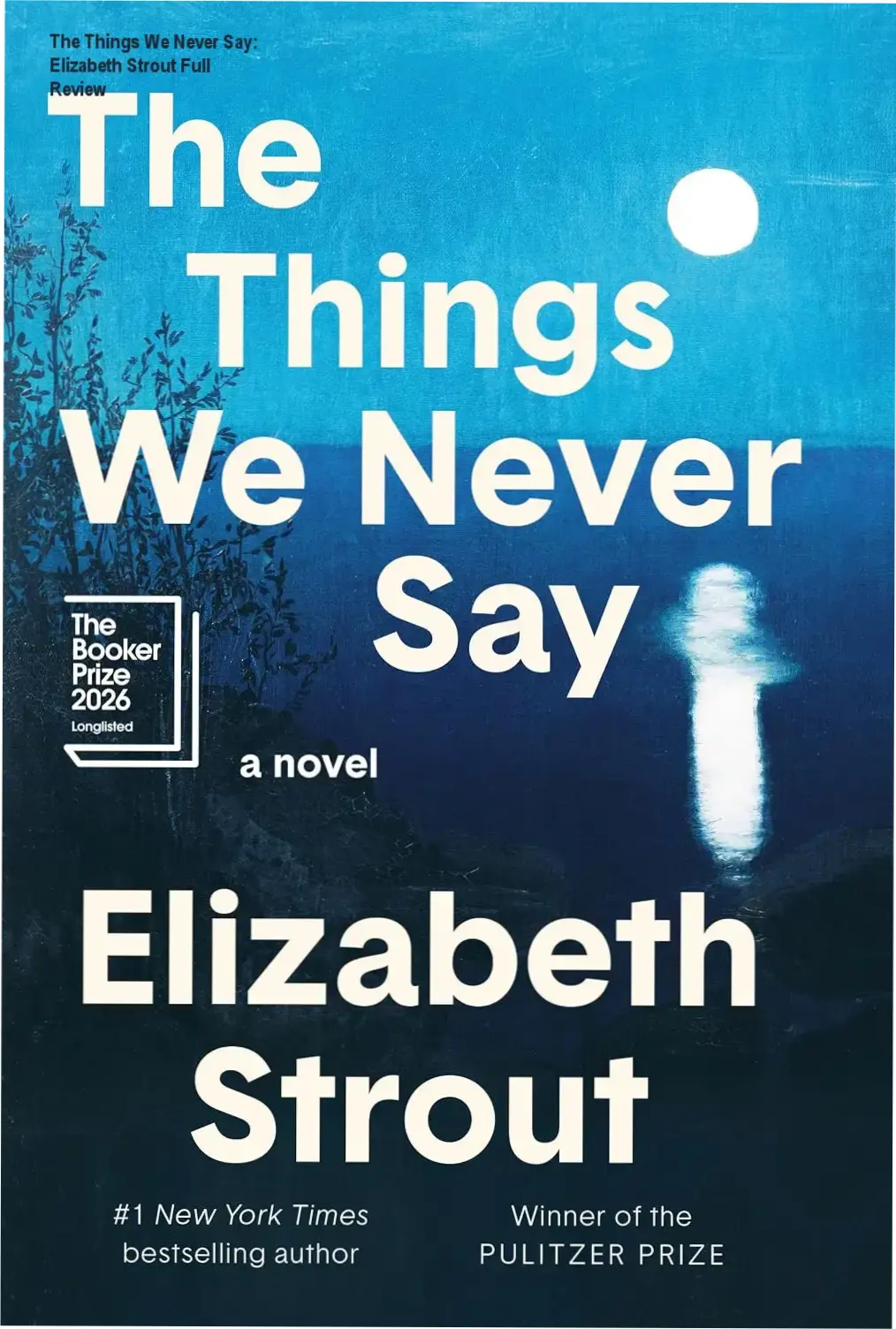
Have you ever looked at someone you’ve known for decades—a spouse, a lifelong friend, a neighbor—and suddenly realized you might not know them at all? There is a profound, unsettling gap between the versions of people we present to the world and the complex, often messy realities they carry inside. We navigate our days through small talk and social rituals, all while guarding secrets that define our very existence.
This psychological friction is the heartbeat of modern literature, and few authors dissect it with more precision than Elizabeth Strout. In her latest work, “The Things We Never Say,” Strout tackles the isolation that persists even in a connected world. For readers seeking a deep dive into the nuances of human behavior, checking the availability of this Pulitzer Prize-winning author’s new release is essential to understanding where contemporary fiction is heading.
Ready to dive into “The Things We Never Say”?
Explore available editions, check current live pricing, or download a free sample directly on Amazon.
Preview Free Sample & Check Price on Amazon
*You will be redirected to Amazon. As an Amazon Associate, we may earn from qualifying purchases.
The Architecture of Empathy: Writing Style and Pacing
Elizabeth Strout does not rely on explosive plot twists or high-octane drama to keep a reader engaged. Instead, she masters the art of the “quiet revelation.” The pacing in “The Things We Never Say” is deliberate and rhythmic, much like the tides of the Massachusetts Bay where the protagonist, Artie Dam, sails his boat.
The prose is exquisite but never flowery for the sake of being decorative. It is surgical. Strout uses short, impactful sentences to highlight the suddenness of realization. You don’t just read about Artie’s internal shifts; you feel the weight of his silence. This is a hallmark of her style—transforming mundane daily observations into profound philosophical inquiries.
Narrative Structure: The Dual Life of Artie Dam
The narrative structure revolves around the concept of duality. On one hand, we see Artie as the pillar of his community—the history teacher who corrects casual cruelties and maintains a stable marriage. On the other hand, we see the man plagued by an inexplicable sense of isolation.
The tension doesn’t come from external antagonists, but from the friction between Artie’s public persona and his private reality. When a secret is revealed that threatens to upend his world, the book shifts from a character study into a profound exploration of how we rebuild ourselves after our fundamental truths are shaken.
| Analytical Feature | Evaluation |
|---|---|
| Narrative Depth | Exceptional; focuses on psychological nuance over action. |
| Prose Quality | High; elegant, precise, and deeply empathetic. |
| Pacing | Slow/Contemplative; best for patient readers. |
Expectation vs. Reality: What Readers Are Saying
Based on data from Goodreads and Amazon reviews, there is a clear divide in reader expectations. Many readers come to Strout expecting a sweeping epic, but what they find is something much more intimate and perhaps more challenging.
Common feedback suggests that while some find the pacing “slow,” most seasoned literary fiction readers praise it for its “unflinching honesty.” One recurring sentiment on Goodreads is that Strout has a “magical ability to make you feel seen,” even when describing characters whose lives are vastly different from your own.
- The “Strout Effect”: Readers often report a sense of melancholy that lingers long after closing the book.
- Character Connection: Unlike many contemporary novels where characters feel like archetypes, Artie Dam feels like someone you might actually encounter in a classroom or at a local party.
- Complexity vs. Simplicity: The story is simple in its premise but incredibly complex in its execution of human psychology.
Target Audience Fit & Final Verdict
Who is this book for? It is not for those looking for a fast-paced thriller or an escapist fantasy. This is for the reader who enjoys examining the “why” behind human behavior—the person who finds beauty in small gestures and complexity in quiet conversations.
If you appreciate authors like Alice Munro or Kazuo Ishiguro—writers who find the extraordinary within the ordinary—this novel is essential reading. It serves as a mirror to our own lives, forcing us to ask what secrets we are keeping and how much we truly know about those sitting across from us at the dinner table.
“Strout’s capacious empathy and rigorous attention to the nuances of human behavior and psychology are as evident as ever.” — The Boston Globe
Who Should Read This Book?
Elizabeth Strout’s latest work is not a fast-paced thriller or a plot-driven epic. It is a surgical examination of the “unsaid”—the quiet gaps in human connection that define our existence. If you crave high-octane suspense or rapid character arcs, skip this book. You will likely find the pacing too deliberate and the focus on internal monologue frustratingly slow.
However, for readers who appreciate character studies like those of Jane Austen or Alice Munro, this novel is a masterclass. It is designed for the introspective reader: someone who finds more drama in a subtle shift in a neighbor’s tone than in an explosive action sequence. If you enjoy exploring the psychological complexities of middle age, isolation, and the fragility of long-held truths, this is a high-value acquisition.
Value for Money & Practical Expectations
At approximately 207 pages, this is a lean, efficient narrative. You aren’t paying for “fluff” or filler chapters; every page serves to deepen the psychological profile of Artie Dam. The value here lies in the emotional density rather than the page count. It is a compact, potent dose of literary fiction that delivers significant intellectual ROI.
| Reader Profile | Expectation |
|---|---|
| Literary Fiction Enthusiasts | High satisfaction; profound insights. |
| Thriller/Action Readers | Low satisfaction; may feel “too slow.” |
| Short-Read Seekers | Ideal; high impact per page. |
Quick FAQ
- Is it a sequel? No, it stands as a standalone exploration of human nature.
- What is the reading level? Sophisticated prose; requires attention to nuance and subtext.
- What is the primary theme? The tension between our public personas and our private secrets.
Ultimately, Strout proves once again why she is a Pulitzer Prize winner. She doesn’t just tell a story; she dissects the human condition with empathetic precision. To see how this fits into your digital library, you can check current reader reviews on Amazon.
Final Editorial Verdict
The Things We Never Say delivers on its core promise for its intended audience, offering compelling insights without fluff. As highlighted in our detailed edition breakdown, its practical depth and readability are its greatest strengths.
We also recommend checking the official Kindle sample and reader ratings before making your final purchase decision.
*You will be redirected to Amazon. As an Amazon Associate, we earn from qualifying purchases.