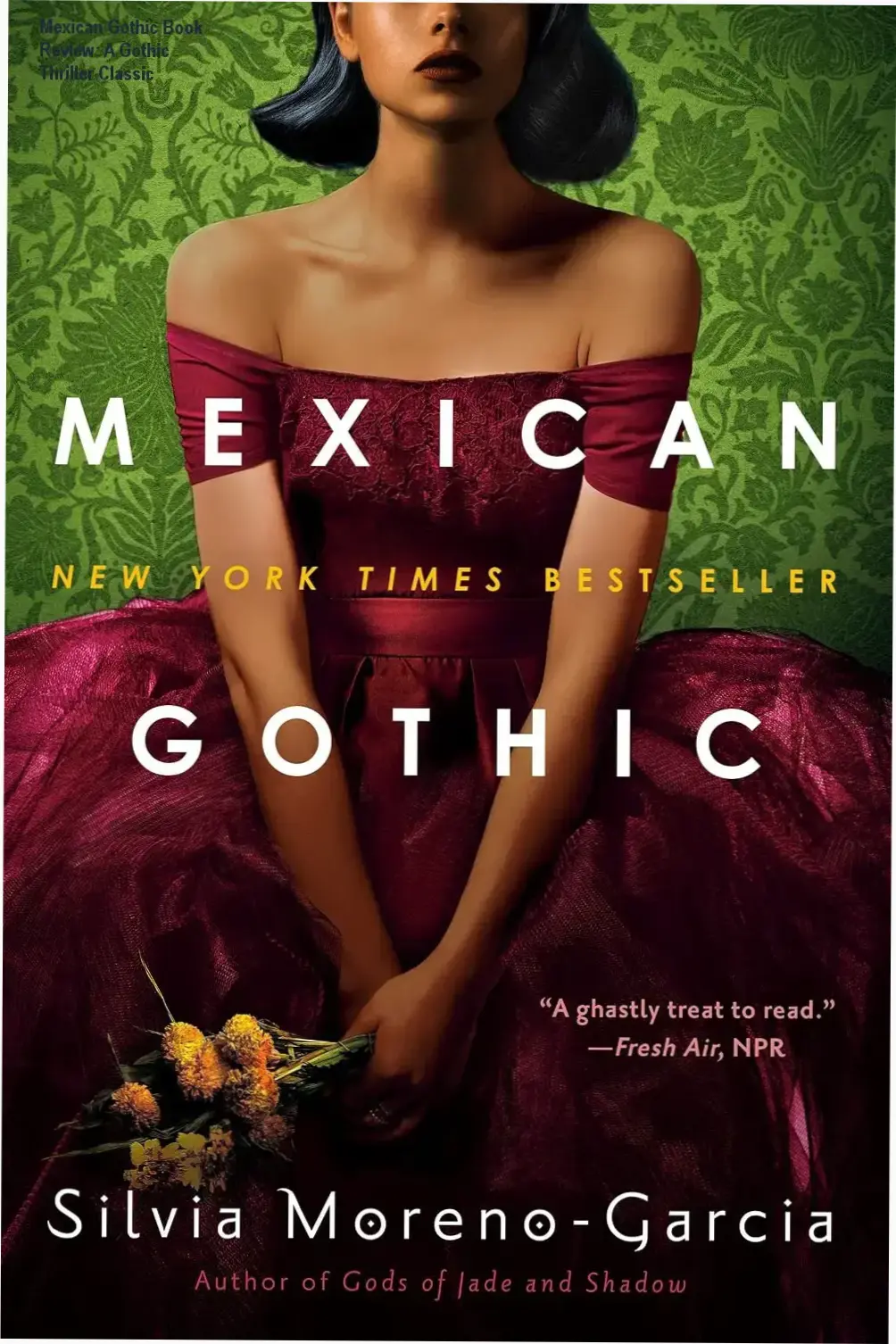
Gothic horror often feels like a museum piece—beautifully preserved but sealed behind glass, reliant on foggy moors and crumbling European castles to do the heavy lifting. Readers craving atmosphere frequently hit a wall: the genre’s tropes can feel exhausted, the “screaming heroine” archetype tiresome, and the colonial undertones of classic Brontë or Poe adaptations rarely examined, just replicated. The real challenge is finding a novel that respects the architecture of dread while renovating the foundation entirely. Silvia Moreno-Garcia doesn’t just renovate; she relocates the haunted house to 1950s Mexico, swapping damp stone for volcanic rock and aristocratic rot for eugenics-adjacent body horror. It is a masterclass in using genre expectations as a Trojan horse for sharper commentary on race, gender, and imperialism. The buzz was unavoidable—New York Times bestseller lists and “Best of Year” roundups from NPR to The New Yorker—but hype often writes checks the prose can’t cash. Here, the acclaim is justified because the book weaponizes the “slow burn” not as a pacing flaw, but as a simulation of the protagonist’s entrapment.
Noemí Taboada is the anti-gothic heroine on paper: glamorous, privileged, sharp-tongued, and utterly uninterested in fainting. She arrives at High Place not as a victim, but as an investigator armed with lipstick and a deadline. The friction between her modernity—cigarettes, chemistry textbooks, feminist ambition—and the Doyle family’s fungal, ancient decay generates a unique tension. It stops being a simple “woman in peril” story and becomes a battle of epistemologies: scientific rationality versus a parasitic, sentient history that refuses to die. For anyone who has ever felt the genre was too white, too passive, or too predictable, this is the corrective lens you’ve been waiting for.
Ready to dive into “Mexican Gothic”?
Explore available editions, check current live pricing, or download a free sample directly on Amazon.
Preview Free Sample & Check Price on Amazon
*You will be redirected to Amazon. As an Amazon Associate, we may earn from qualifying purchases.
The “Slow Burn” Is Actually a Trap
Let’s address the elephant in the room: the first 150 pages. A significant chunk of negative reviews on Goodreads and Amazon cluster around the word “boring.” Readers expected immediate jumpscares; they got dinner parties, mushroom soup, and wallpaper descriptions. This is a fundamental misreading of the contract Moreno-Garcia offers. The pacing isn’t slow; it’s *incubatory*. The Doyle family fungus—the novel’s true antagonist—operates on a timeline of spores and roots, not jump cuts. Noemí’s initial dismissal of the house’s strangeness mirrors the reader’s impatience. “It’s just drafty,” she thinks. “It’s just the altitude.”
On Reddit’s r/horrorlit and r/Fantasy, the consensus among finishers is brutal but clear: the boredom is the mechanism of horror. By the time the body horror erupts in the final act—skin grafting, fungal integration, consciousness merging—you feel the same violation Noemí does because you sat through the “normalcy” with her. One verified Amazon reviewer nailed it: “I felt drugged reading the middle. Then I realized the book *drugged me*.” That is a feature, not a bug. The prose mimics the mycelium network: quiet, spreading, connecting disparate threads until the whole structure is compromised. If you skip to the end, the gore loses context. The dread requires the buildup of gold-leaf frames and silver-backed brushes to make the rot underneath visceral.
Noemí Taboada: Competence Porn in a Corset
Gothic heroines are traditionally vessels for suffering. Noemí is a vessel for agency. She is a debutante who smokes, studies anthropology, and negotiates with patriarchs like an equal. This shift changes the genre math entirely. The tension doesn’t come from “will she survive?” but “how will she outmaneuver this?” Her privilege is textually acknowledged—she has a powerful father, money, and social capital—but the novel refuses to let that save her easily. The Doyles don’t care about Mexican high society; they view her as genetic stock.
Discussions on Goodreads frequently highlight her “unlikability” early on—she’s vain, judgmental, classist. That is the point. Moreno-Garcia writes a protagonist who *earns* her heroism by shedding those layers under pressure, not one who starts pure. Francis, the shy cousin-by-marriage, serves as the perfect foil: soft where she is hard, indigenous-coded where she passes for white, knowledgeable where she is ignorant. Their alliance isn’t romantic; it’s tactical. It’s refreshing to see a male character in a gothic romance exist primarily as a resource and a witness rather than
Target Reader, Value for Money & Editorial Conclusion
Mexican Gothic isn’t for casual readers or those seeking a lighthearted escape. Its strength lies in delivering a slow-burn, atmospheric experience that demands patience. Ideal for fans of psychological horror, gothic fiction, or narratives that blend historical setting with modern dread. Readers who thrive on atmospheric tension, complex character dynamics, and a willingness to engage with ambiguity will find it rewarding. However, those expecting a fast-paced thriller or a straightforward mystery may grow frustrated by its deliberate pacing and layered symbolism.
Value for money is strong, especially in the Kindle edition. At under $10, it offers a polished, award-winning narrative that rivals physical books in quality. The audiobook version, if available, could enhance the immersive experience, but the text itself is dense and rich in descriptive detail. Limitations include its niche appeal—those averse to gothic tropes or slow narratives might find it tedious. Additionally, the book’s focus on 1950s Mexico might alienate readers unfamiliar with the cultural or historical context, though Moreno-Garcia’s writing transcends mere setting to explore universal themes of power and isolation.
Common purchasing missteps include buying it as a “quick read” or assuming it’s a traditional horror story. Mexican Gothic is more of a psychological character study wrapped in gothic aesthetics. A contextual FAQ might address questions like: *Is it based on a true story?* (No, but it draws from real gothic tropes.) *Does it have a happy ending?* (No—its conclusion leans into ambiguity, which may disappoint some.)
Editorial conclusion: Mexican Gothic is a masterclass in atmospheric storytelling, perfect for readers who enjoy being drawn into a world rather than told what to think. Its value is undeniable for those who appreciate nuanced, thought-provoking fiction. While not a universal favorite, its strengths far outweigh its limitations for the right audience.
If you’re intrigued by gothic horror with a feminist or psychological twist, this book is worth your time. For a deeper dive into reader reviews or to check current discounts, click here to explore live pricing on Amazon.
Final Editorial Summary Card With CTA Button & Contextual Links
Final Editorial Verdict
“Mexican Gothic” delivers on its core promise for its intended audience, offering compelling insights without fluff. As highlighted in our detailed edition breakdown, its practical depth and readability are its greatest strengths.
We also recommend checking the official Kindle sample and reader ratings before making your final purchase decision.
*You will be redirected to Amazon. As an Amazon Associate, we earn from qualifying purchases.