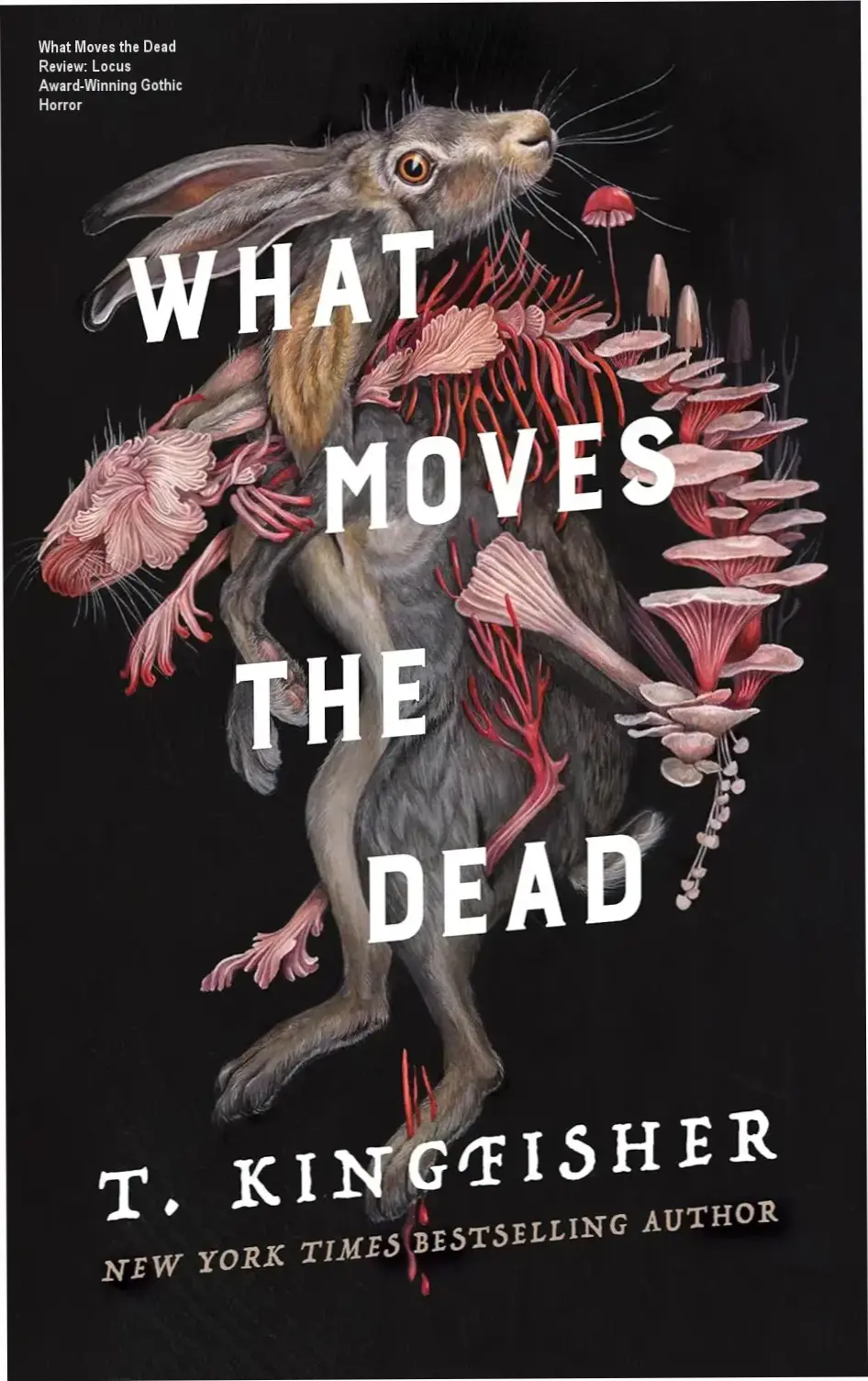
Retellings of classic Gothic horror often feel like a safe bet—until you realize most of them just drape a fresh coat of paint on a crumbling facade. T. Kingfisher’s What Moves the Dead doesn’t renovate Poe’s “The Fall of the House of Usher”; it excavates the rot underneath and finds something biological, ancient, and deeply unsettling waiting in the dark water. The premise sounds familiar: a soldier returns to a decaying estate to visit a dying friend. But the execution strips away the romantic melancholy of the original and replaces it with mycological body horror and a protagonist whose pragmatism acts as the reader’s only anchor. If you’ve ever wondered what happens when a Hugo-winning author applies rigorous speculative biology to a ghost story, this novella answers that question with fungal precision.
The market is flooded with “atmospheric” horror that mistakes vagueness for mood. Kingfisher commits the cardinal sin of genre fiction: she explains the monster. And somehow, the explanation—a parasitic fungus hijacking the local ecosystem—is far more terrifying than any vague curse. It grounds the supernatural in a grotesque, tangible reality that lingers long after the final page. This isn’t just a tribute; it’s a hostile takeover of a classic text.
Ready to dive into “What Moves the Dead”?
Explore available editions, check current live pricing, or download a free sample directly on Amazon.
Preview Free Sample & Check Price on Amazon
*You will be redirected to Amazon. As an Amazon Associate, we may earn from qualifying purchases.
The Voice of a Soldier, Not a Victim
Alex Easton is the engine that drives this narrative. A retired “sworn soldier” from a fictional Balkan-esque nation (Gallacia), Alex uses the singular “they” pronoun—a cultural norm for their people, not a modern affectation. This detail matters. It establishes a world with its own internal logic immediately.
Alex doesn’t scream. They inventory. They assess supply lines, structural integrity, and escape routes. When the rabbits start moving wrong—coordinated, purposeful, wrong—Alex reaches for a pistol, not a crucifix. This competence porn is catnip for readers tired of protagonists making horror-movie mistakes. On Reddit’s r/Fantasy and r/Horror threads, the consensus is nearly unanimous: Alex Easton is a top-tier protagonist precisely because they treat a supernatural incursion as a logistical problem.
But competence doesn’t equal invulnerability. The horror seeps in through the cracks of Alex’s professionalism. The fungus doesn’t care about your rank or your sidearm. It cares about moisture, warmth, and a host. Watching a hyper-competent soldier realize their tools are useless against a spore cloud is where the book earns its dread.
Mycology as Monster Design
Kingfisher (also known as Ursula Vernon) has a background in biology and it shows. The antagonist isn’t a ghost; it’s Ophiocordyceps on steroids. The “fungus among us” trope has exploded recently (The Last of Us, Mexican Gothic), but Kingfisher leans hard into the science of it.
Enter Angus, the British mycologist. He serves as the exposition dump, but he’s written with such gleeful academic obsession that it lands as character work rather than info-dumping. He explains the “resurrection” of Madeline Usher not as magic, but as a fruiting body strategy. The tarn (lake) isn’t haunted; it’s a nutrient broth.
This shift from supernatural to biological horror changes the reader’s contract with the text. You aren’t waiting for a priest; you’re waiting for a fungicide that doesn’t exist. It forces a confrontation with the body as meat—vulnerable, permeable, and colonizable. Several Goodreads reviewers noted this made the book “viscerally gross” in a way ghost stories rarely achieve. One verified Amazon purchaser wrote:
“I had to put it down during lunch. The description of the hare… I haven’t felt that kind of visceral revulsion mixed with fascination since reading The Troop.”
Pacing: The Novella Sweet Spot
At 163 pages, What Moves the Dead understands its own length. It doesn’t pad. The first act establishes the geography of the house and the tarn. The second act introduces the biology. The third act burns it down.
There is zero fat. Every scene pulls double duty: advancing plot and deepening the mycological threat. The “sleepwalking” scenes with Madeline are standard Gothic fare on the surface, but the internal monologue from the fungus’s perspective (or Madeline’s fading consciousness) reframes them instantly.
Some readers on Goodreads wished for more time with the side characters—specifically the American doctor, Denton, who feels slightly underbaked compared to Angus. But that brevity is a feature, not a bug. This is Alex’s POV. Denton is a tool Alex uses. When the tool breaks, Alex moves on. It’s a cold, military efficiency that defines the book’s rhythm.
Target Reader, Value for Money & Editorial Conclusion
This book isn’t for readers seeking fast-paced thrillers or action-driven narratives. What Moves the Dead demands patience, rewarding those who appreciate slow-burn psychological horror and atmospheric storytelling. The ideal audience includes fans of T. Kingfisher’s previous work, enthusiasts of Poe-inspired tales, or readers who enjoy exploring eerie, isolated settings. Its value lies in its ability to blend supernatural dread with scientific curiosity, creating a unique hybrid that feels both fresh and nostalgic. However, if you’re expecting a quick read or a manual-style guide to horror tropes, this book will disappoint. Its deliberate pacing and dense, symbolic imagery require active engagement, which might alienate casual readers or those unfamiliar with literary horror.
Common purchasing missteps often stem from misunderstanding the book’s genre. It’s not a traditional horror novel with jump scares or explicit content but a cerebral, gothic experience. Readers should approach it with an openness to ambiguity—answers are often buried in metaphor rather than revealed outright. For example, the fungal growths and possessed wildlife aren’t just decorative elements; they symbolize decay and the encroachment of the unknown. This depth adds layers but may frustrate those who prefer clear-cut narratives. The book’s value for money is strong if you prioritize quality over quantity, but its 163-page length might feel short to some, while others might wish for more expansive world-building.
A contextual FAQ could clarify expectations: Is this part of a series? Yes, it’s Book 1 of 3 in the Sworn Soldier trilogy. Will it be scary? Yes, but in a cerebral, unsettling way rather than visceral. Is it suitable for all ages? The themes of madness and death make it more appropriate for mature readers. How does it compare to Poe’s original? Kingfisher modernizes the tone while retaining the eerie, melancholic essence of *The Fall of the House of Usher*. For those unfamiliar with Poe, this book serves as an accessible entry point, though prior knowledge enhances appreciation.
Editorial conclusion: What Moves the Dead excels as a standalone horror novel with a twist. Its strength is in balancing visceral imagery with intellectual engagement, making it a standout in contemporary genre fiction. While its brevity and slow build might not suit everyone, it’s a masterclass in atmospheric tension. Readers who value subtlety over spectacle will find it deeply rewarding. The affiliate link below offers a direct path to explore its Kindle edition or check reader reviews before deciding.
Link_afiliado: Check current reader ratings and sample pages to gauge if this aligns with your preferences.
Final Editorial Summary Card With CTA Button & Contextual Links
Final Editorial Verdict
“What Moves the Dead” delivers on its core promise for its intended audience, offering compelling insights without fluff. As highlighted in our detailed edition breakdown, its practical depth and readability are its greatest strengths.
We also recommend checking the official Kindle sample to see if the pacing suits your reading style before purchasing.
*You will be redirected to Amazon. As an Amazon Associate, we earn from qualifying purchases.