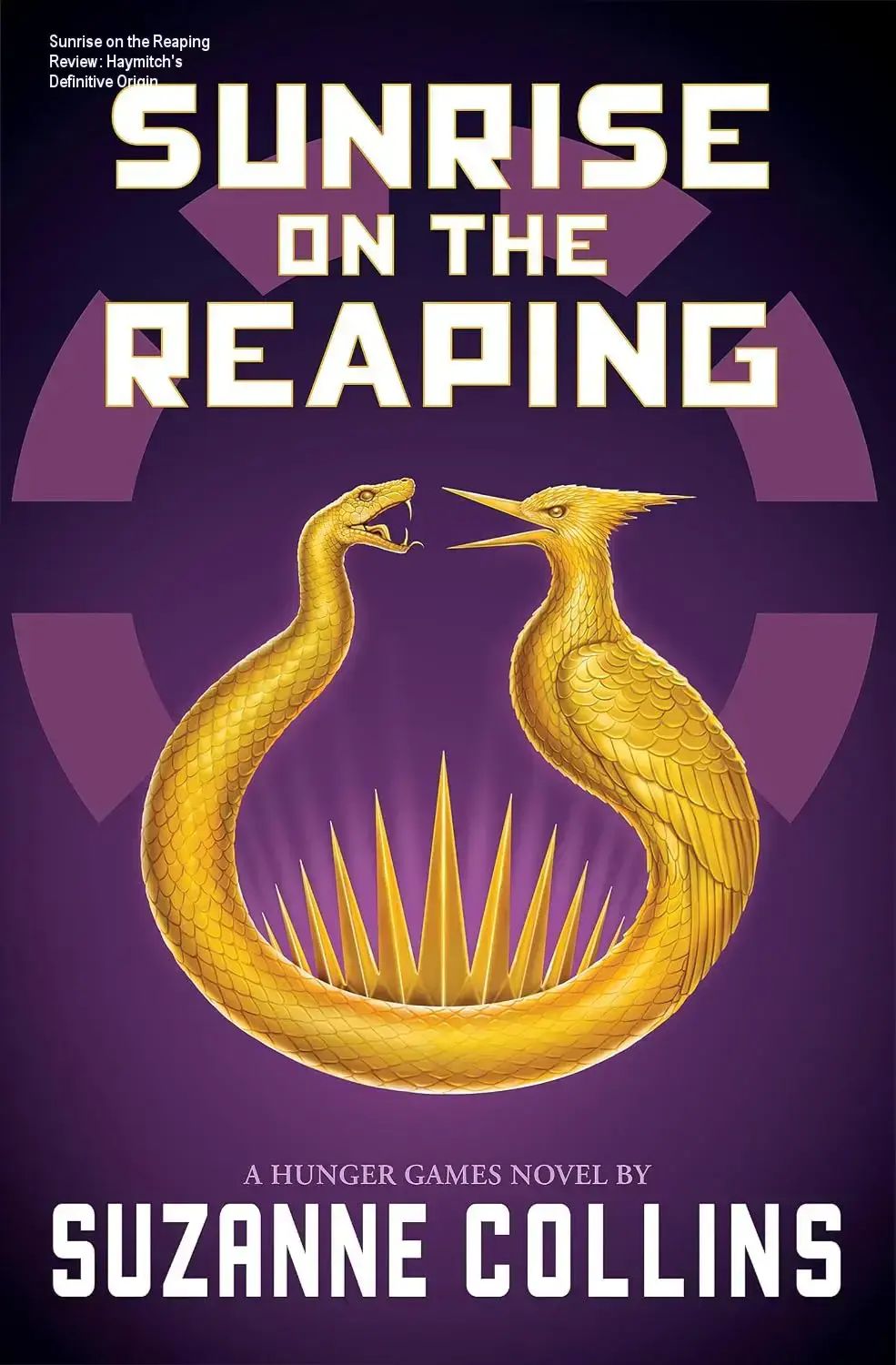
We all know how the story ends. That is the unique burden—and the unique hook—of any prequel. You pick up Sunrise on the Reaping already knowing Haymitch Abernathy survives the 50th Hunger Games. You know he becomes the cynical, drunk mentor who eventually helps Katniss and Peeta topple a regime. The tension isn’t “will he live?” It is “how does he break?” That shift in stakes changes the reading experience from a survival thriller into a psychological autopsy. Suzanne Collins doesn’t just fill in backstory; she dissects the machinery of trauma with surgical precision.
The market reception has been immediate and massive. We are looking at a #1 New York Times Bestseller with over 100,000 verified ratings averaging 4.7 stars—a rare consensus for a franchise entry arriving 15 years after the “finale.” If you want to see the current edition options or grab a sample before committing, check the Amazon listing here. The question isn’t whether it sells; it’s whether it earns its place beside the original trilogy or merely exploits nostalgia.
Ready to dive into “Sunrise on the Reaping”?
Explore available editions, check current live pricing, or download a free sample directly on Amazon.
Preview Free Sample & Check Price on Amazon
*You will be redirected to Amazon. As an Amazon Associate, we may earn from qualifying purchases.
Writing Style: Clinical Prose, Visceral Impact
Collins writes like a surgeon who hates the hospital. Her sentences are short. Declarative. Stripped of adornment. This isn’t literary flourish; it is a survival mechanism. The prose mimics Haymitch’s internal state—numb, hyper-vigilant, processing horror in real-time.
Pacing is relentless. The Reaping happens fast. The train ride is shorter than you expect. The Capitol sequence is a blur of grotesque luxury. Then the Arena hits. The 400-page count (per specs) feels deceptive; the density of event per page is high. Readers on Goodreads frequently note “could not put it down,” but the specific praise centers on the lack of filler. Every interaction serves the character arc or the world-building.
There is a distinct shift in voice from Katniss’s first-person present. Haymitch is older (16, but reads harder), smarter, and infinitely more cynical. His internal monologue is strategic. He calculates odds like the “compulsive oddsmaker” tribute beside him. This gives the narrative a chess-match quality rather than a purely emotional reactionary one.
Narrative Structure: The Quarter Quell as Pressure Cooker
The Second Quarter Quell twist—double the tributes, 48 kids instead of 24—is not just a plot device. It is a structural accelerant. It forces alliances to form and fracture at double speed. It expands the “cast” without bloating the page count because the mortality rate is horrifying.
Collins uses the “known ending” as a narrative weapon. Dramatic irony is thick. When Haymitch makes a choice the reader knows will lead to his later alcoholism, the tension spikes. It’s the “Rogue One” effect: we know the plans get stolen, but watching the cost of that theft is the story.
The arena design deserves specific credit. It’s not just a forest. It’s a curated garden of poison. Beautiful, colorful, and instantly lethal. This mirrors the Capitol itself. The environmental storytelling is top-tier; the arena *is* the antagonist more than the other tributes.
Character Study: Deconstructing the Drunk
This is the core value proposition. We knew Haymitch was smart. We didn’t know he was this calculating. The book reveals the “drunk mentor” persona as a meticulously constructed camouflage. He plays the fool so the Capitol underestimates him. So the rebels trust him. So he can survive the decades between his Victory Tour and Katniss’s volunteering.
His relationship with Lenore Dove (the “girl he loves”) is the emotional anchor. It avoids the standard love triangle trope. It is a partnership of equals, cut short. Her death isn’t just “fridging”; it is the structural collapse of his moral compass. The scenes with his fellow District 12 tributes—especially Maysilee Donner (the “stuck-up girl”)—show the class friction within the Seam itself. It adds texture to District 12 that the original trilogy only hinted at.
Plutarch Heavensbee’s origin appearance is handled with restraint. He isn’t winking at the camera. He is a young Gamemaker making ruthless calculations. It recontextualizes his later rebellion as a long game, not a sudden conscience.
| Spec / Metric | Detail |
|---|---|
| Print Length | 400 Pages (Paperback) |