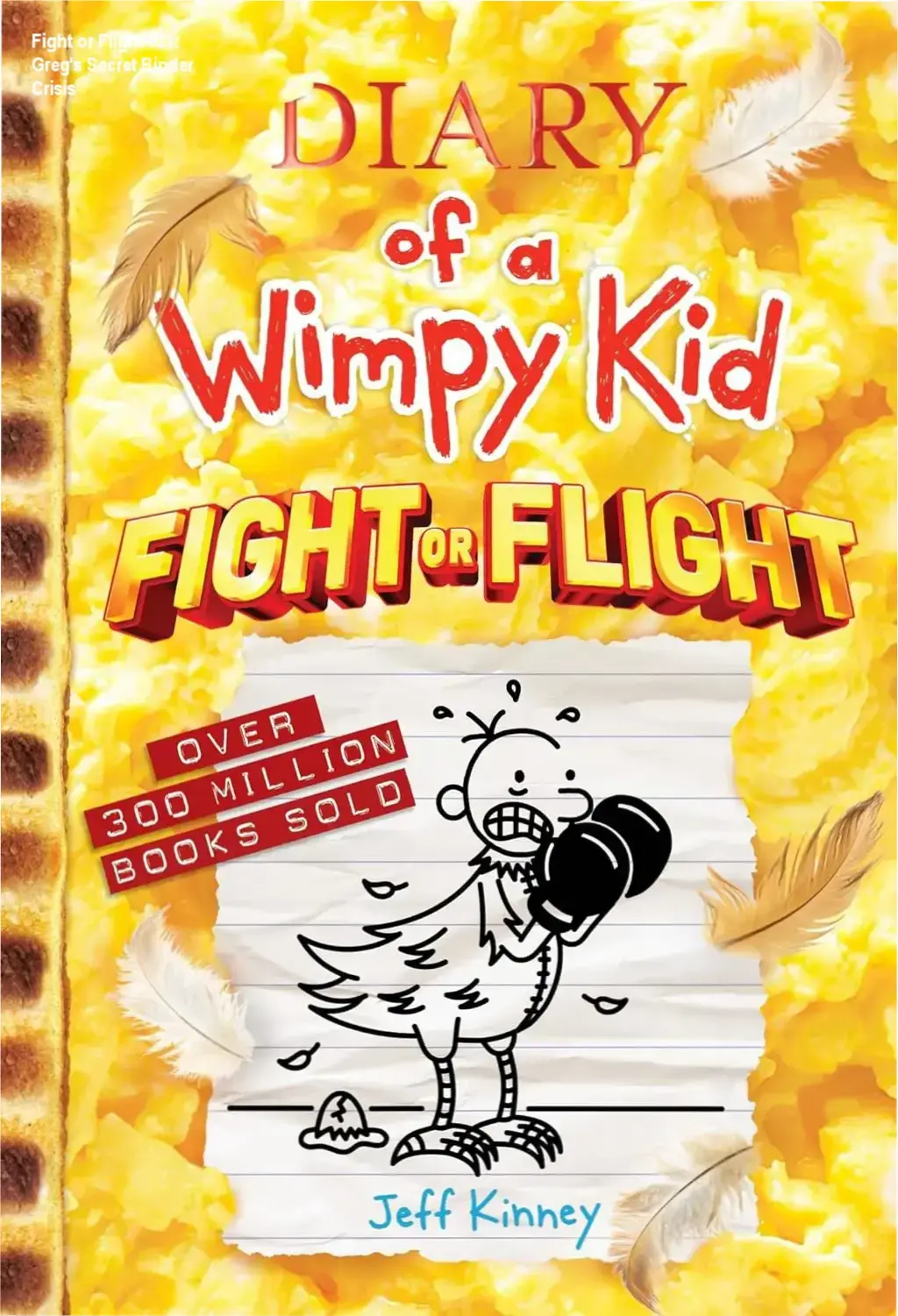
Middle school operates on a currency of secrets and reputations, a volatile economy where a single leaked text or a misplaced notebook can bankrupt a kid’s social standing overnight. Jeff Kinney has built a twenty-one-book empire on this exact premise, mining the gap between how kids see themselves and how the world actually sees them. In Fight or Flight, the mechanism of destruction is analog—a physical binder stuffed with Greg Heffley’s tactical intelligence on the school’s power players. It is a delightfully retro catastrophe in an era of digital footprints, proving that the medium doesn’t matter; the humiliation is universal. Parents watching their own kids navigate this minefield will recognize the sweat-inducing panic of the “lost folder” scenario immediately. You can check the current edition details here to see how the physical package holds up.
The series has long since graduated from “diary format” into something closer to a graphic novel hybrid, and this volume leans hard into the visual storytelling. Kinney’s line work remains deceptively simple, but the comedic timing in the panel layouts is sharper than ever. There is a specific joy in watching a formula this mature still manage to surprise you—not with plot twists, because Greg will always be Greg—but with the specific texture of the chaos. The “fight or flight” dichotomy isn’t just a title; it structures the entire second act, forcing Greg into corners where his usual weaseling fails him. It is comfort food with a surprisingly high nutritional value for reluctant readers.
Ready to dive into “Fight or Flight (Diary of a Wimpy Kid #21)”?
Explore available editions, check current live pricing, or download a free sample directly on Amazon.
Preview Free Sample & Check Price on Amazon
*You will be redirected to Amazon. As an Amazon Associate, we may earn from qualifying purchases.
Writing Style & Pacing: The Kinney Rhythm
Kinney writes in a distinct staccato. Short sentences. Visual punchlines. Zero fat. This book runs 224 pages, but the actual “reading time” for a fluent adult is under an hour. For the target demographic (ages 8–12), it sits in that sweet spot: long enough to feel like a “real book,” short enough to finish in two sittings. The pacing relies on the “escalating disaster” model. Small error. Cover-up attempt. Catastrophic failure. Repeat.
The “diary” conceit allows for a fragmented narrative that mimics how kids actually remember events—highlight reels of embarrassment. There are no flowery transitions. Greg doesn’t reflect; he reacts. This drives literary purists crazy, but it is exactly why the books work for kids who hate reading. The text never gets in the way of the joke. On Reddit’s r/books and r/YAlit threads, the consensus remains split: adults call it “repetitive,” kids call it “accurate.” Both are right. The repetition is the feature. It builds a predictable safety net so the weird specificities—like the mechanics of a “Cheese Touch” or the politics of a lunch table—land harder.
One subtle evolution in #21: the illustrations carry more narrative weight than the prose in several key sequences. There are full-page spreads with zero dialogue that function as pure visual comedy. It respects the reader’s visual literacy. It’s not “illustrated text”; it’s sequential art.
Narrative Structure: The Binder as Chekhov’s Gun
The central MacGuffin—Greg’s “Bully Binder”—is introduced early, forgotten during a middle-section diversion involving a school fundraiser, and returns with a vengeance in Act Three. This is classic structure disguised as chaos. The fundraiser subplot (selling overpriced chocolate bars, naturally) feels like filler until you realize it disperses the student body, creating the physical space for the binder to change hands.
Kinney understands that middle school stakes are microscopic but feel existential. The binder doesn’t contain nuclear codes; it contains nicknames, weakness inventories, and seating-chart strategies. To an adult, it’s trivial. To a 6th grader, it’s a kill list. The book never breaks character to explain this. It trusts the reader to feel the gravity. Goodreads reviews from younger readers frequently cite the “binder scene in the cafeteria” as the most stressful part of the series in years. That is high praise for a cartoon stick-figure book.
The ending doesn’t “resolve” so much as “stabilize.” Greg survives. He doesn’t learn a heartwarming lesson. He gains a scar. That honesty is the series’ secret sauce.
Character Dynamics: Greg vs. The World (And Rowley)
Greg Heffley remains one of the most compelling anti-heroes in children’s literature. He is selfish, lazy, manipulative, and deeply insecure. He is also the narrator, so we are trapped inside his justification engine. Fight or Flight tests his relationship with Rowley Jefferson harder than recent entries. Rowley isn’t just the “dumb best friend” anymore; he has boundaries. He pushes back. He gets angry. It adds a layer of tragedy to the comedy—Greg is slowly out
Who Should Buy This (And Who Should Skip)
Ideal reader: Kids aged 8–12 who already love the series. Reluctant readers who need visual breaks. Parents looking for a low-stakes, high-engagement bedtime book.
Skip it if: You expect character growth or narrative closure. This is volume 21; the formula is frozen. Readers craving fresh dynamics or emotional stakes will feel the repetition.
Common misstep: Buying this as a “first Wimpy Kid” book. The in-jokes and running gags land better with context. Start earlier in the series for the full effect.
Value for Money: Hardcover vs. Digital
The hardcover feels sturdy — typical Abrams quality. Pages handle re-reads well. But at full retail, it’s a premium price for 224 pages of large font and illustrations. Library first? Smart move. Kindle sample? Essential. The humor translates fine digitally, but kids love the physical “diary” tactile feel.
Resale value holds decently for collectors. Gift-giving? Safe bet. Just don’t overpay for “first edition” labels — this is a mass-market print run.
Quick FAQ
- Is it standalone? Technically yes, but callbacks reward loyalty.
- Scary content? Zero. Pure slapstick and social awkwardness.
- Reading level? Solid Grade 3–4. High interest, low barrier.
- Illustrations? Kinney’s signature style — consistent, expressive, half the storytelling.
Editorial Bottom Line
This is comfort food. Predictable, reliable, and exactly what the fanbase expects. No surprises. No risks. If your household runs on Wimpy Kid momentum, buy it. If the spark faded at book 15, this won’t reignite it. Check current discounts and reader photos here before committing.
Final Editorial Verdict
“Fight or Flight (Diary of a Wimpy Kid #21): A laugh-out-loud knockout from the #1 international bestselling Diary of a Wimpy Kid series (Volume 21)” delivers on its core promise for its intended audience, offering compelling insights without fluff. As highlighted in our detailed edition breakdown, its practical depth and readability are its greatest strengths.
We also recommend checking the official Kindle sample and reader ratings before making your final purchase decision.
*You will be redirected to Amazon. As an Amazon Associate, we earn from qualifying purchases.