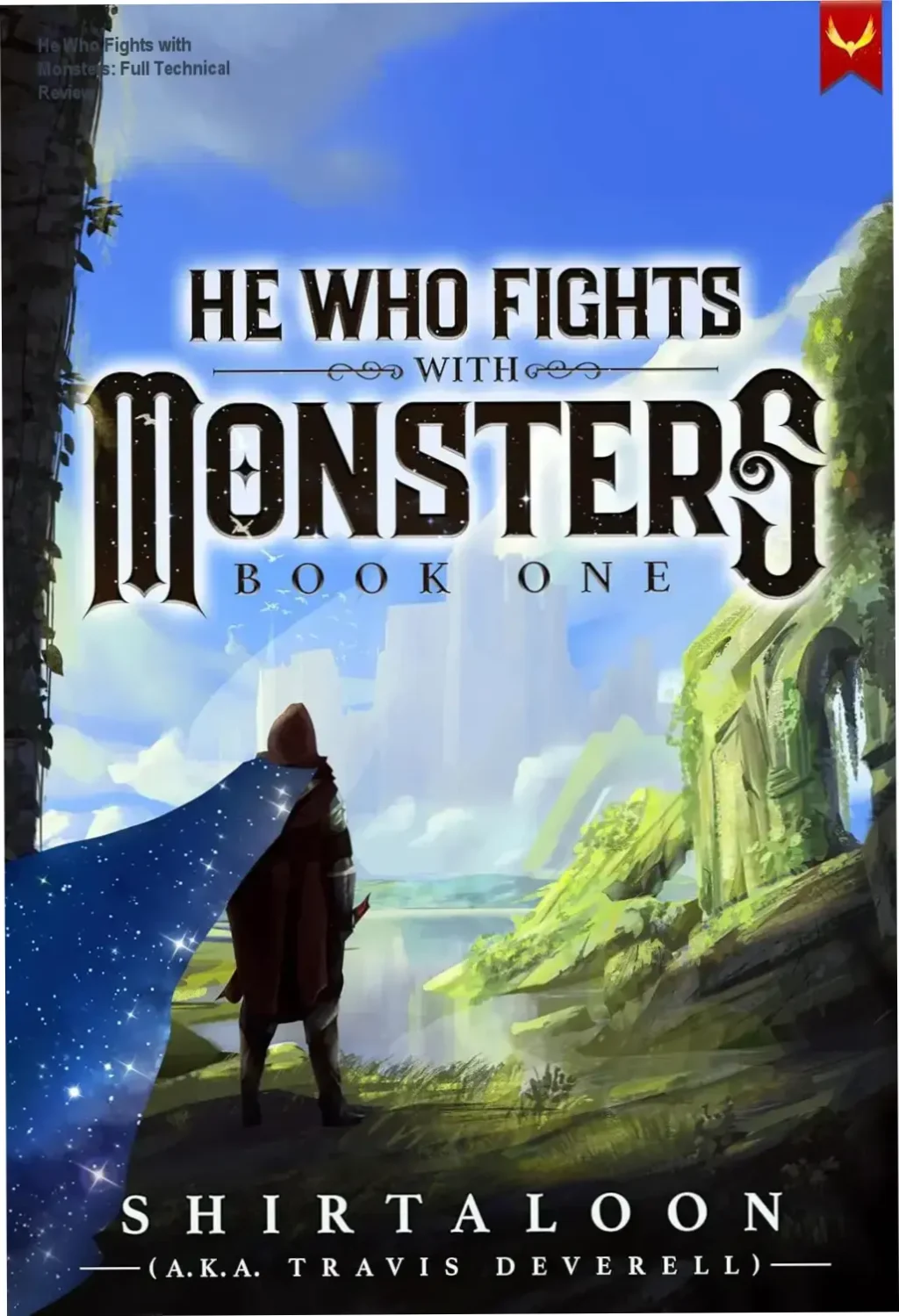
Most readers approach the LitRPG genre looking for a simple escape: a predictable progression system where numbers go up and the hero wins through sheer grit. We crave the dopamine hit of seeing a character level up, but we often forget that true immersion requires more than just a stat sheet. The real challenge in modern fantasy is finding a narrative that balances the mechanical “game” elements with genuine, messy human stakes.
When a story promises a “weak-to-strong” journey, the skepticism is natural. We have seen it a thousand times—the protagonist becomes an unstoppable god too quickly, rendering all tension obsolete. However, He Who Fights with Monsters attempts to subvert this by grounding its magic in a complex, almost political ecosystem. It asks a question that resonates with anyone who has ever felt out of place: how do you maintain your morality when the very tools you use to survive are fundamentally “evil”?
Ready to dive into “He Who Fights with Monsters: A LitRPG Adventure”?
Explore available editions, check current live pricing, or download a free sample directly on Amazon.
Preview Free Sample & Check Price on Amazon
*You will be redirected to Amazon. As an Amazon Associate, we may earn from qualifying purchases.
The Progression Paradox: Mechanics vs. Narrative
The core of this series lies in its hybrid system. Shirtaloon doesn’t just give Jason a leveling bar; he blends traditional LitRPG progression with elements of cultivation. This creates a much steeper learning curve for the protagonist—and the reader. You aren’t just watching a man get stronger; you are watching him navigate a biological and magical restructuring of his entire existence.
In many Reddit discussions regarding the genre, readers complain about “stat bloat,” where the numbers become so large they lose meaning. This book avoids that trap by focusing on the qualitative changes in Jason’s abilities. His powers are “evil” by nature, which creates a psychological friction that most LitRPG authors ignore. The tension isn’t just “can he kill the monster?” but “will using this power turn him into the monster?”
Writing Style: The Australian Wit and the Isekai Clash
The pacing is relentless, a trait likely honed during its massive success on Royal Road. Jason is an Australian middle manager dropped into a high-stakes, serious magical world. This cultural clash provides a layer of humor that prevents the story from becoming a grimdark slog. It’s a “slice-of-life” approach wrapped in an epic adventure skin.
The prose is conversational. It doesn’t try to be Tolkien; it tries to be engaging. This makes the 680-page runtime of the first book feel surprisingly manageable. However, some veteran fantasy readers might find the dialogue a bit too modern or “internet-centric” at times. It is a stylistic choice that favors accessibility over high-fantasy formality, which is a polarizing but effective decision for the target demographic.
Expectation vs. Reality: The “Weak-to-Strong” Trap
A common misconception is that “weak-to-strong” means the hero starts as a peasant with a wooden sword. In this world, the power gap is massive, but the intelligence gap is where the real combat happens. Jason has to use wit and strategy to survive encounters that should, by all rights, end him in seconds.
Readers on Goodreads frequently highlight that the world-building is much denser than they initially expected. It isn’t just a playground for the hero; it is a functioning society with its own politics, gods, and hierarchies. The hero doesn’t overshadow the world; rather, the world constantly threatens to swallow him whole.
| Feature | Analysis |
|---|---|
| Progression System | Complex blend of LitRPG and Cultivation; highly rewarding. |
| Character Depth | High; protagonist faces genuine moral dilemmas. |
| World-Building | Extensive; political intrigue and magic systems are interconnected. |
| Pacing | Fast-moving; optimized for binge-reading. |
Target Audience Fit: Who Should (and Shouldn’t) Read This?
If you are looking for a dry, academic treatise on magic systems, look elsewhere. This is a book for people who want to feel the rush of discovery. It is for the gamer who understands the thrill of a perfect build, and for the fantasy fan who wants a protagonist they can actually relate to—someone who makes mistakes, feels fear, and occasionally just needs to find some pants.
Conversely, if you despise “system” elements (blue boxes, stats, notifications), this will be a frustrating experience. The system is baked into the DNA of the narrative. You cannot strip the mechanics away without losing the heart of the story. But for those who embrace it, the payoff is a rich, multi-layered epic that stands far above the standard genre fare.
“It’s hard to be good when all your powers are evil.” — This central conflict is what separates a mere game-simulator from a true work of character-driven fantasy.
The Verdict: A Genre Benchmark
With over 13 million views on its original platform, the success of this series isn’t accidental. It succeeds because it respects the reader’s intelligence. It understands that while we love the mechanics of a game, we stay for the soul of the characters. Jason’s journey is not just about gaining levels; it is about navigating the terrifying reality of becoming something more than human.
For anyone looking to enter the LitRPG space, this is a gold standard. It provides a roadmap for how to integrate gaming logic into a cohesive, emotionally resonant narrative. It is high-octane, intellectually stimulating, and, most importantly, deeply addictive.
Who Should Read This?
This series is tailor-made for the hardcore LitRPG enthusiast who craves more than just numbers on a page. If you enjoy the “crunchy” mechanics of progression systems—where character growth feels earned through strategic choices rather than mere luck—you will find much to love here. The blend of cultivation elements with traditional RPG stats creates a depth that caters to readers who enjoy analyzing power scaling and combat tactics.
However, certain readers should skip this series:
- Casual readers looking for “fluff-free” action: While there is combat, the narrative spends significant time on political intrigue, social dynamics, and complex world-building.
- Purists who dislike “Isekai” tropes: The premise of being transported to another world is a foundational pillar here. If this trope irritates you, the book won’t change your mind.
- Those seeking a “Power Fantasy” without consequences: Jason’s journey is about growth, but his “evil” power set introduces moral complexities that prevent it from being a simple, mindless escapism.
Value for Money & Expectations
At 680 pages for Book 1, you are getting a substantial epic. This isn’t a novella; it is a heavy investment of time. The value lies in the world-building longevity. Because this is the first of thirteen books, the author is playing a long game. You aren’t just buying a story; you are entering a massive, interconnected universe that rewards long-term reading.
| Feature | Expectation |
|---|---|
| Progression Speed | Gradual and methodical (Weak-to-Strong) |
| Tone | Humorous yet high-stakes/serious |
| Complexity | High (Political & Mechanical) |
Quick FAQ
Is the protagonist overpowered? Not initially. He has a unique kit, but he must learn how to use it effectively to survive.
Is the magic system consistent? Yes, the combination of cultivation and LitRPG mechanics follows strict internal logic.
In summary, if you want a deep, character-driven epic that treats its magic system with scientific rigor and its characters with emotional weight, this is a top-tier choice. You can check current Kindle deals to start your journey into this massive universe.
Final Editorial Verdict
He Who Fights with Monsters delivers on its core promise for its intended audience, offering compelling insights without fluff. As highlighted in our detailed edition breakdown, its practical depth and readability are its greatest strengths.
We also recommend checking the official Kindle sample and reader ratings before making your final purchase decision.
*You will be redirected to Amazon. As an Amazon Associate, we earn from qualifying purchases.