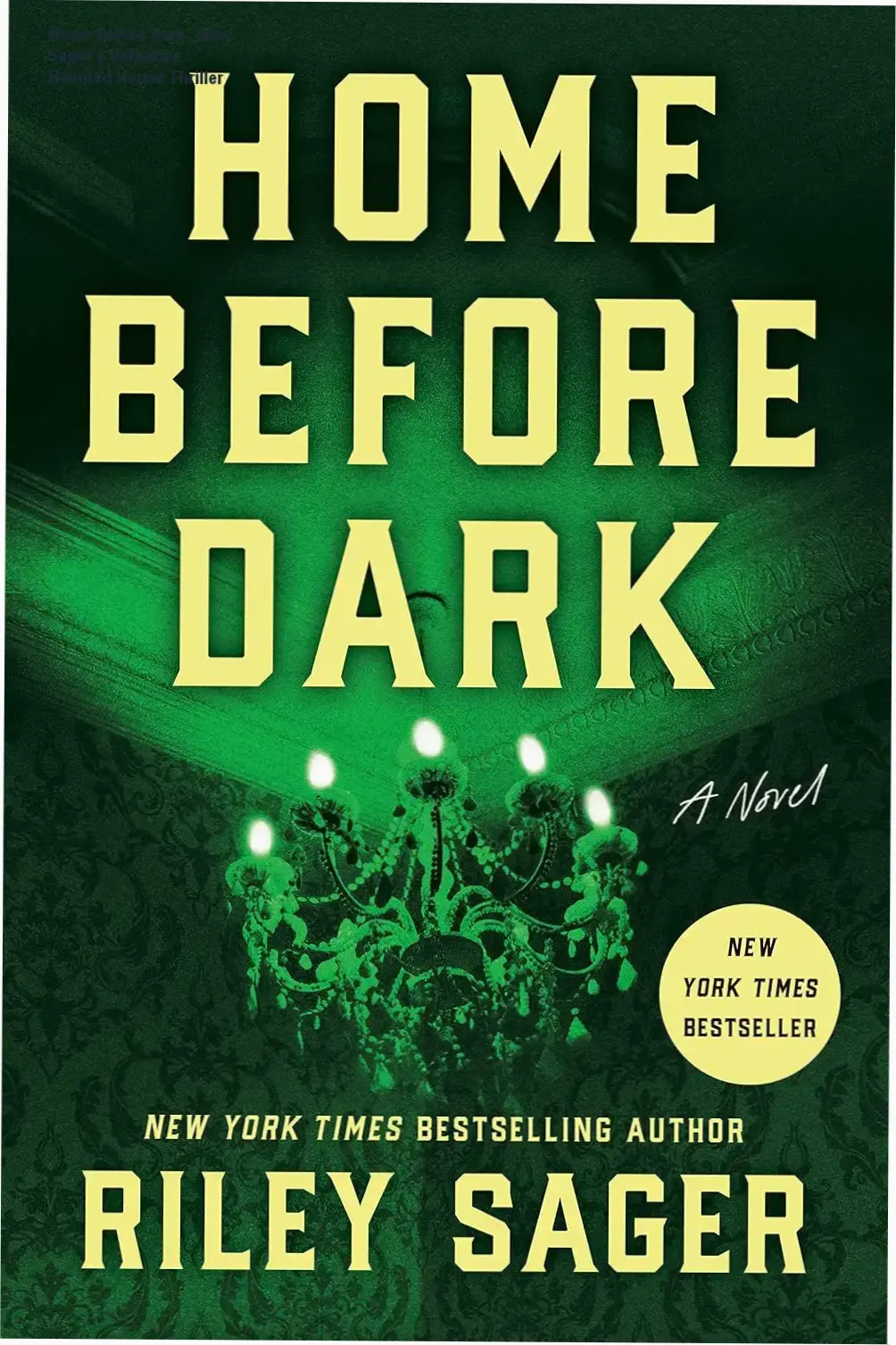
Inheriting a house sounds like a windfall until you realize the deed comes with a side of generational trauma and a bestselling memoir claiming the place is possessed. That is the precise nightmare Maggie Holt walks into in Home Before Dark. Riley Sager builds his entire architecture on a question that nags at every true-crime obsessive: what happens when the “based on a true story” label is a lie constructed by the people you trust most? The novel weaponizes the Amityville Horror archetype, stripping away the jump scares to expose the rotting foundation of a family myth. If you have ever stayed up late debating the veracity of a haunted house documentary, this book targets that exact itch. You can check the current edition and reader consensus here before committing to the long night of reading this demands.
Sager does not just write a thriller; he dissects the economics of trauma. The “House of Horrors” manuscript inside the novel functions as a character itself, a paper ghost haunting the physical structure of Baneberry Hall. The tension lives in the gap between Maggie’s pragmatic restoration lens and the supernatural lore cemented in public consciousness. It is a smart, meta-fictional trap that elevates the genre above standard creepy-house fare.
Ready to dive into “Home Before Dark”?
Explore available editions, check current live pricing, or download a free sample directly on Amazon.
Preview Free Sample & Check Price on Amazon
*You will be redirected to Amazon. As an Amazon Associate, we may earn from qualifying purchases.
The Architecture of a Dual Timeline
Sager deploys a “book within a book” structure that could easily collapse under its own weight. It doesn’t. The chapters alternate between Maggie’s present-day renovation and excerpts from House of Horrors, her father’s 1990s blockbuster. This isn’t just a gimmick; it’s the engine of the mystery. You are forced to read the “fake” memoir as a primary source, hunting for discrepancies between the text and the physical evidence Maggie uncovers.
The pacing is surgical. The memoir sections drip with 90s horror sensationalism—cold spots, phantom smells, demonic possession. Maggie’s sections are grounded in plaster dust, contractor bids, and Vermont winter gloom. The friction between these two textures creates a cognitive dissonance that mirrors Maggie’s own skepticism. Readers on Goodreads frequently cite this structure as the novel’s strongest asset, noting it turns the act of reading into an act of forensic comparison.
However, the density of the memoir excerpts can stall momentum for readers allergic to pastiche. It requires patience. You are essentially reading two books simultaneously, waiting for the Venn diagram to overlap. When it does, the payoff is structural rather than just plot-based.
Atmosphere as Antagonist
Baneberry Hall is not a backdrop; it is the antagonist. Sager understands that a haunted house story lives or dies by sensory details. The descriptions of the rambling Victorian—its hidden passages, the “dead room,” the oppressive Vermont woods—are tactile. You smell the mildew. You feel the draft from the cellar.
Maggie’s profession as a home restorer is a stroke of genius. It gives her a legitimate reason to poke behind baseboards and crawl into attics without relying on “curiosity killed the cat” tropes. She reads the house like a text. Water stains become clues. Warped floorboards become timelines. This professional lens grounds the supernatural elements in material reality, making the eventual weirdness hit harder because the mundane world has been so thoroughly established.
Reddit threads in r/thrillerbooks often highlight the “Dead Room” sequence as a masterclass in claustrophobic writing. It achieves terror without a single ghost appearing, relying entirely on spatial awareness and the weight of the house’s history. That restraint is rare in modern commercial thrillers.
The Meta-Critique of True Crime Exploitation
Beneath the gothic veneer lies a sharp critique of the true-crime industrial complex. Ewan Holt, Maggie’s father, didn’t just write a memoir; he commodified his family’s trauma. He turned his wife’s mental health struggles and his daughter’s childhood into a franchise. The novel asks: who owns a story when the subjects never consented to the publication?
This theme resonates violently in the current era of Netflix docuseries and podcast empires built on real victims. Locals in the fictional Vermont town treat Maggie with hostility not because of ghosts, but because her father’s book ruined their property values and privacy. They are the collateral damage of a “true story.” Sager forces the reader to complicit— we are consuming a thriller *about* the ethics of consuming thrillers.
Some Amazon reviewers felt this thematic layer was heavy-handed in the final act. The villain’s monologue leans into exposition. But the underlying anger at the exploitation narrative gives the book a moral weight that lingers after the final twist is revealed. It refuses to let you enjoy the scare without feeling the cost.
The Twist Mechanics and Narrative Fairness
Let’s address the elephant in the room: the ending. Sager is known for rug-pulls. Home Before Dark delivers a triple-layered reversal. First, the haunting is real. Second, the haunting is fake (staged by the father). Third, the *reason* for the staging hides a much darker, human crime.
Is it fair? Mostly. The clues are seeded early—the father’s financial desperation, the mother’s convenient “possession” symptoms aligning with the book’s marketing needs, the specific architecture of the lies. A re-read reveals Sager playing fair with the mystery genre’s contract. The supernatural red herring is the point; the genre expects a ghost, so the human evil hides in plain sight behind the ectoplasm.
Critics on Goodread
Target Reader, Value for Money & Editorial Conclusion
If you’re a fan of psychological thrillers with a supernatural twist, *Home Before Dark* will likely resonate. The book appeals to readers who enjoy atmospheric storytelling where personal history collides with modern dread. Those who appreciate character-driven narratives—especially ones rooted in familial tension and unresolved past trauma—will find Maggie Holt’s journey compelling. However, if you’re seeking a fast-paced, action-heavy horror or a technical guide to paranormal phenomena, this isn’t the right fit. The story unfolds gradually, prioritizing emotional depth over visceral scares, which may frustrate readers expecting immediate thrills.
Value for money hinges on expectations. At its Kindle price point (~$9.99), the book offers substantial content for fans of literary thrillers. Its 397 pages are dense with lore, character development, and eerie symbolism, making it a worthwhile investment for those who enjoy slow-burn tension. However, readers anticipating a “quick manual” to haunted houses or a plot-driven page-turner might feel shortchanged. The novel’s strength lies in its exploration of guilt, memory, and the line between fact and fiction—topics that justify its length but may not satisfy those craving traditional horror tropes.
Common purchasing missteps include assuming the book is a direct sequel to *House of Horrors* or expecting a traditional ghost story. While Sager weaves elements from the memoir into the plot, *Home Before Dark* is a distinct narrative with its own themes. The FAQ section should address:
- Is this book scary? Yes, but more psychologically than physically.
- Does it require prior knowledge of the first book? No, but familiarity enhances appreciation.
- Is it suitable for younger audiences? Likely not, due to mature themes.
Editorial conclusion: *Home Before Dark* succeeds for readers who value introspective, character-rich stories over jump scares. Its value is strongest for those interested in how past traumas shape present actions—a theme Sager executes with nuance. The Kindle edition’s accessibility and lower cost enhance its appeal, though physical book buyers might miss tactile details.
If you’re undecided, check recent reader reviews to gauge if the book’s pacing aligns with your preferences.
Final Editorial Summary Card with CTA Button & Contextual Links
Final Editorial Verdict
“Home Before Dark” delivers on its core promise for its intended audience, offering compelling insights without fluff. As highlighted in our detailed edition breakdown, its practical depth and readability are its greatest strengths.
We also recommend checking the official Kindle sample and reader ratings before making your final purchase decision.
*You will be redirected to Amazon. As an Amazon Associate, we earn from qualifying purchases.