
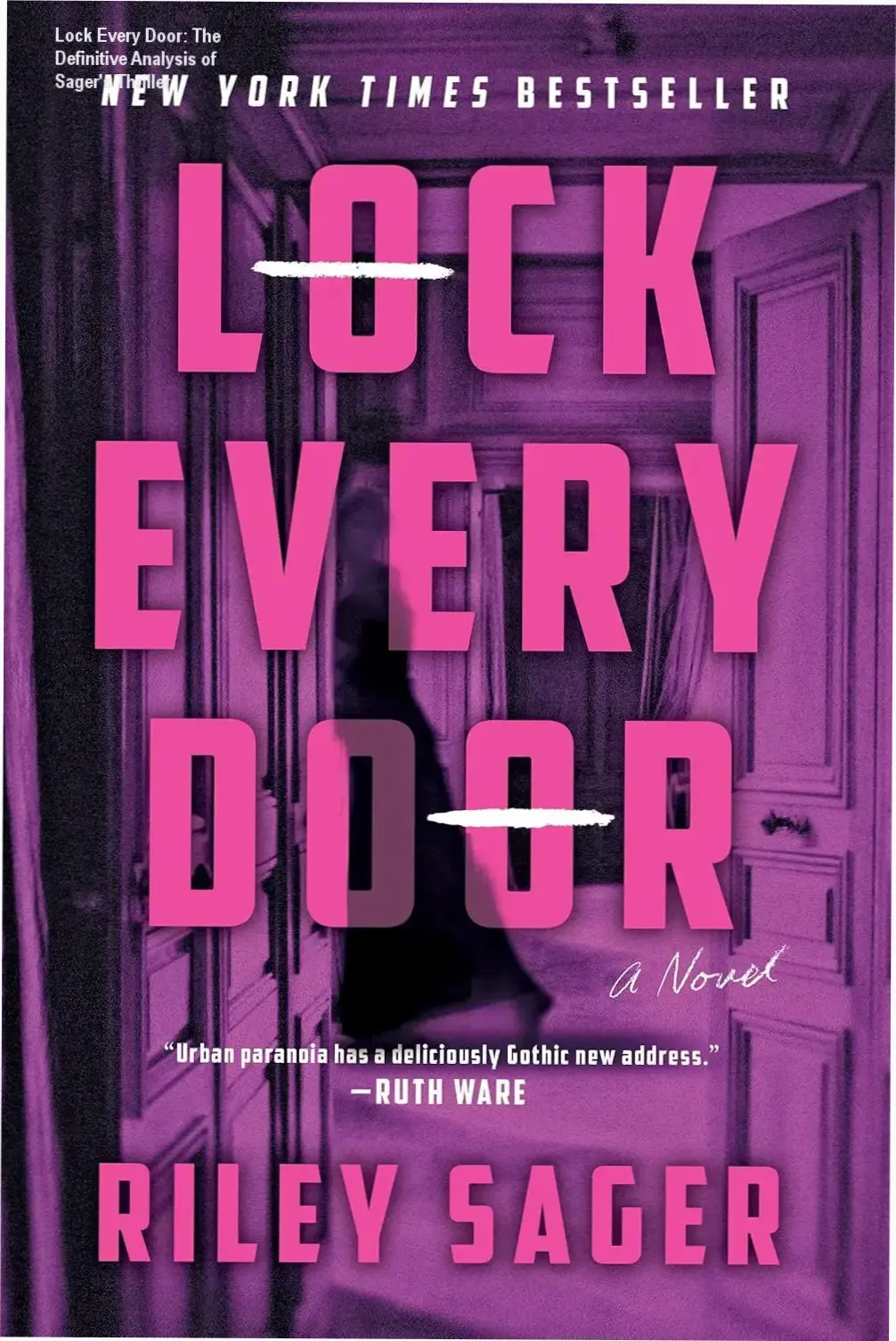
We have all encountered that specific brand of anxiety when a professional opportunity feels a bit too convenient. A high-paying job with minimal requirements, a luxurious living space, and a set of strange, arbitrary rules that feel more like a warning than a handbook. It is the classic “too good to be true” scenario that triggers our survival instincts while simultaneously tempting our desperation.
In the world of psychological thrillers, this tension is the primary engine. Riley Sager’s Lock Every Door taps into the primal fear of being trapped in a place that looks like a sanctuary but functions like a cage. Before diving into the technical breakdown of the plot, you can check the current reader reception and availability of the book to see if the hype still holds up.
The market for “domestic suspense” is oversaturated with unreliable narrators and shocking twists. However, Sager manages to carve out a space by blending modern Manhattan luxury with old-world gothic horror. The result is a narrative that doesn’t just want to scare you; it wants to make you double-check the locks on your own front door.
Ready to dive into “Lock Every Door”?
Explore available editions, check current live pricing, or download a free sample directly on Amazon.
Preview Free Sample & Check Price on Amazon
*You will be redirected to Amazon. As an Amazon Associate, we may earn from qualifying purchases.
The Architecture of Suspense: Writing Style and Pacing
Sager writes with a cinematic precision. He doesn’t waste time with flowery prose; instead, he focuses on the “beat.” The sentences are lean, the dialogue is functional, and the scene transitions are sharp.
The pacing is designed like a tightening vice. The first third of the book is an atmospheric slow-burn. It establishes the oppressive rules of the Bartholomew and the creeping feeling that Jules is being watched.
Once the inciting incident—the disappearance of Ingrid—occurs, the tempo shifts. The book moves from a psychological study of isolation to a frantic investigative race. It is a “page-turner” in the most literal sense.
However, a skeptical reader will notice a pattern. Sager relies heavily on the “cliffhanger chapter.” While effective for keeping you awake until 3 AM, it can occasionally feel like a mechanical trick rather than organic tension.
The “Rules” as a Narrative Device
The brilliance of Lock Every Door lies in its constraints. The rules Jules must follow—no visitors, no nights spent elsewhere—create an immediate sense of claustrophobia.
These rules serve two purposes. First, they isolate the protagonist, making her vulnerable. Second, they provide a roadmap for the reader. We know that in a thriller, rules exist solely to be broken.
The act of breaking these rules becomes the primary source of dopamine for the reader. Every time Jules sneaks out or asks a forbidden question, the stakes rise.
“Because once you’re in, the Bartholomew doesn’t want you to leave.”
This line encapsulates the central theme: the illusion of luxury masking a predatory nature. The building itself becomes a character—a silent, wealthy monster that consumes the people within its walls.
Expectation vs. Reality: The “Sager Twist”
If you have read Riley Sager before, you know he is obsessed with the twist. The expectation is a complete 180-degree turn in the final fifty pages. This book delivers, but with a caveat.
Many readers on Goodreads and Reddit express a polarized view of the ending. Some find the revelation shocking and satisfying. Others find it a bit too “out there,” bordering on the improbable.
The reality is that Sager prioritizes the “shock factor” over airtight logic. If you are a reader who needs every single plot point to be mathematically sound, the ending might frustrate you.
But if you read thrillers for the ride and the adrenaline, the payoff is immense. It transforms the story from a simple ghost tale into something much more sinister and human.
| Feature | Analysis | Verdict |
|---|---|---|
Atm
Who This Book Is Actually ForLock Every Door isn’t for the reader seeking a literary masterpiece or a complex political treatise. It is designed for the “binge-reader.” You will love this if you enjoy:
Who Should Skip ItAvoid this book if you have a low tolerance for slow-burns. While the plot is gripping, Sager spends significant time building the claustrophobia of the setting before the gears truly shift. Also, skip this if you prefer “hard-boiled” detective novels. There is no grizzled PI here—only a desperate woman caught in a high-society nightmare. If you expect a purely supernatural ghost story, you might find the eventual resolution too grounded or, conversely, too twisted. The “Value for Money” Reality CheckAt 381 pages, the narrative density is well-balanced. You aren’t paying for fluff, but you are paying for a carefully paced puzzle. Common Misstep: Many buyers expect a quick “beach read” that they can skim. This isn’t that. To appreciate the payoff, you have to track the subtle clues Sager drops about the building’s history. If you skim, the ending will feel like it came from nowhere. Quick Editorial FAQIs it actually scary? It’s more “unsettling” than “terrifying.” It plays on isolation and paranoia rather than jump scares. How’s the pacing? It starts as a simmer and ends as a boil. The last 50 pages are where the real value lies. Does it live up to the Stephen King endorsement? Yes, in terms of “midnight reading” capability. It is an addictive piece of commercial fiction. Final VerdictRiley Sager has mastered the art of the commercial thriller. Lock Every Door is a polished, high-tension ride that understands exactly what its audience wants: a sense of dread and a shocking twist. It doesn’t reinvent the genre, but it executes the “haunted luxury apartment” trope with surgical precision. For those wanting to see if the current pricing matches the quality, we suggest checking the latest user ratings and discounts on Amazon. Final Editorial Verdict“Lock Every Door” delivers on its core promise for its intended audience, offering compelling insights without fluff. As highlighted in our detailed edition breakdown, its practical depth and readability are its greatest strengths. We also recommend checking the official Kindle sample and reader ratings before making your final purchase decision. *You will be redirected to Amazon. As an Amazon Associate, we earn from qualifying purchases.  Related Posts


|