Most of us like to believe that family secrets eventually fade into the fog of history. We tell ourselves that the skeletons in the closet stay there because the people who put them there are gone. But the truth is, secrets don’t disappear; they just wait for someone curious enough—or desperate enough—to start digging.
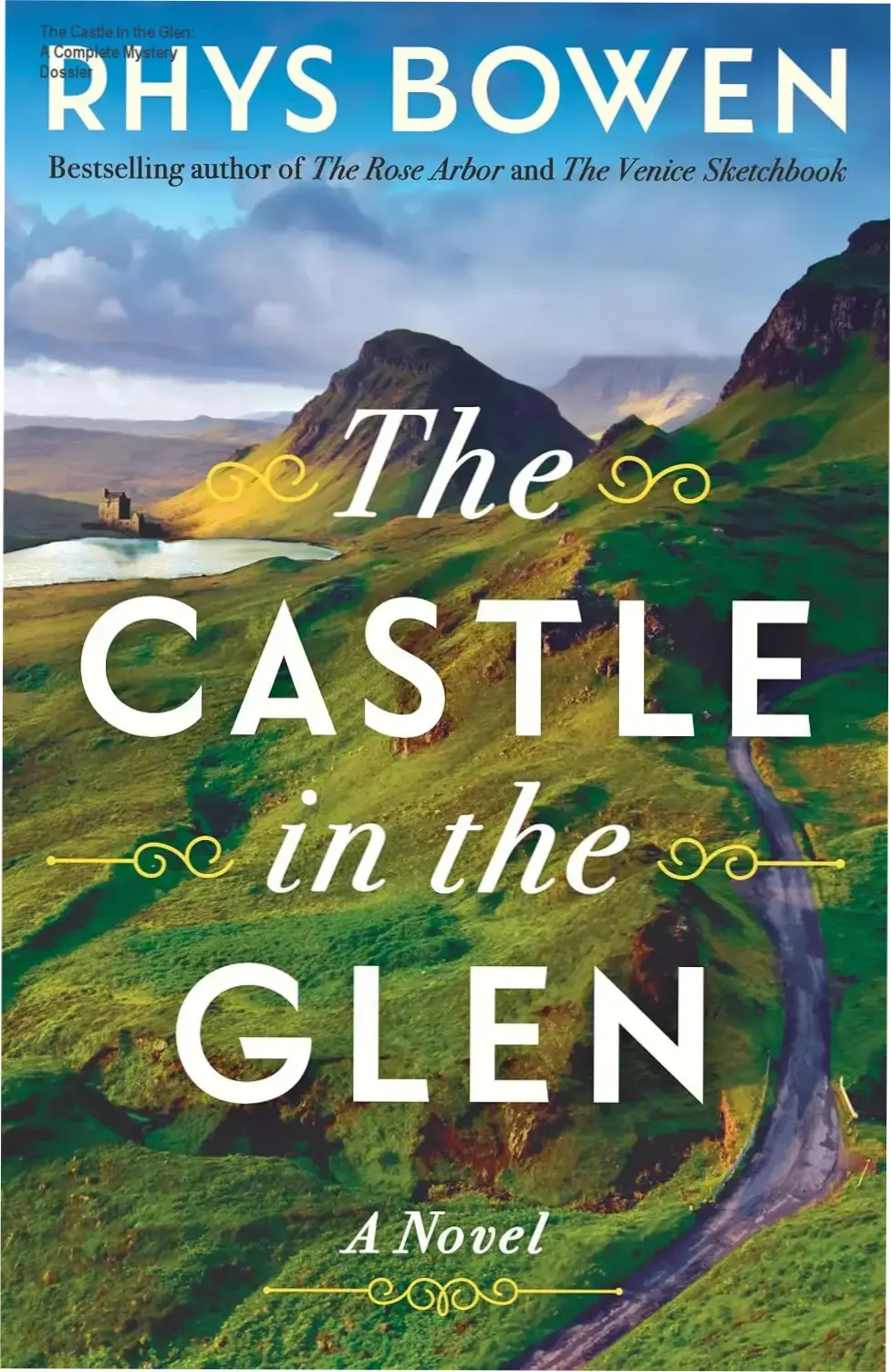
This tension between public image and private shame is the engine driving Rhys Bowen’s latest work. For readers who enjoy the slow burn of a historical mystery where the setting is as much a character as the protagonist, checking the current reception of The Castle in the Glen reveals why it has dominated the amateur sleuth charts.
Ready to dive into “The Castle in the Glen: A Novel”?
Explore available editions, check current live pricing, or download a free sample directly on Amazon.
Preview Free Sample & Check Price on Amazon
*You will be redirected to Amazon. As an Amazon Associate, we may earn from qualifying purchases.
The Meta-Narrative Architecture: A Story Within a Story
Rhys Bowen doesn’t just give us a mystery; she gives us a puzzle about the act of storytelling itself. The plot centers on Emma Callander, a ghostwriter hired to finish a novel for the fading memory of author Iris Blackburn.
This “meta” approach is a clever move. It allows the reader to question the reliability of the narrative from page one. If the original author is losing her grip on reality, can we trust the “facts” Emma is researching?
The transition from 1965 (Emma’s timeline) to 1904 (the mystery’s origin) is handled with a precision that avoids the usual confusion found in dual-timeline novels. It creates a rhythmic pull between the present research and the past crime.
Skeptics might call this a trope, but Bowen uses it to explore the blurred line between fiction and true crime. The discovery that the “novel” is actually a suppressed history adds a layer of urgency that a standard mystery lacks.
| Technical Element | Execution Analysis | Impact on Reader |
|---|---|---|
| Timeline Jump | 1965 vs 1904 split | High tension and curiosity |
| Narrative Device | Ghostwriting framework | Adds a layer of skepticism/mystery |
| Setting | Isle of Skye, Scotland | Immersive, atmospheric “Cozy” vibe |
Atmospheric Immersion: The Scottish Highlands as a Character
The Isle of Skye isn’t just a backdrop here; it’s a psychological weight. Bowen describes the misty Highlands and medieval castles in a way that feels claustrophobic yet expansive.
For the seasoned mystery reader, the “isolated village” setting is common. However, the specific Scottish cultural nuances—the aristocratic pride and the local superstitions—give the story a distinct identity.
The “Wild Girl” legend serves as the emotional core of the mystery. It taps into the universal human fear of the outsider and the social machinery used to erase people who don’t fit the mold.
Reading this feels like stepping into a painting. The descriptions are vivid without being purple prose, maintaining a pace that keeps the plot moving while allowing the atmosphere to seep in.
Pacing, Plot Twists, and the “Sleuth” Dynamic
The chemistry between Emma and Tony Gordon, the lawyer, provides the necessary romantic friction to balance the darker themes of drowning and disappearance.
The pacing is deliberate. It doesn’t rush to the reveal, which is a relief in an era
Who Should Actually Read This?
This isn’t a book for the “hard-boiled” crime enthusiast. If you are looking for gritty police procedurals or fast-paced forensic thrillers, you will find the pacing here frustratingly atmospheric. The Castle in the Glen is precision-engineered for the “Cozy Mystery” crowd—specifically those who enjoy the intersection of historical research and modern-day sleuthing.
The ideal reader is someone who appreciates a “story within a story” structure. If you enjoy the trope of a protagonist uncovering a cold case while navigating the social frictions of a tight-knit community, this hits the mark. It appeals heavily to fans of dual-timeline narratives where the past doesn’t just provide backstory, but actively dictates the stakes of the present.
Who Should Skip It?
- The Plot-Hustler: If you demand a twist every ten pages, the slow-burn buildup of the Scottish Highlands might feel like a slog.
- The Hard-Realist: Readers who dislike the “amateur sleuth” convenience—where a writer happens to find the one clue the police missed for 50 years—should look elsewhere.
- Non-Fiction Seekers: Despite the heavy research into the Isle of Skye, this is a novel. Do not buy this expecting a historical guide to the Highlands.
Value Analysis: Is It Worth Your Time?
At 424 pages, the value lies in the immersion. Rhys Bowen doesn’t rush the atmosphere; she builds the mist, the castle walls, and the tension of the Blackburn family secrets with a steady hand. The “value for money” here is found in the escapism. You aren’t just paying for a plot resolution; you’re paying for a vivid sensory experience of 1965 Scotland.
The main risk is the romantic subplot. For some, the chemistry between Emma and Tony Gordon adds a necessary layer of warmth; for the skeptical reader, it may feel like a standard genre requirement that distracts from the central mystery of the “Wild Girl.”
Editorial Verdict
The book succeeds because it understands its lane. It doesn’t try to be a psychological thriller; it’s a sophisticated puzzle. While the “ghostwriter” setup is a familiar device, the specific Scottish setting and the 1904 cold case provide enough freshness to keep the narrative from feeling derivative. It is a polished, reliable piece of genre fiction that delivers exactly what it promises on the cover.
If you’re undecided, the best way to gauge if Bowen’s prose style fits your rhythm is to browse the verified reader reviews and current pricing on Amazon.
Final Editorial Verdict
“The Castle in the Glen: A Novel” delivers on its core promise for its intended audience, offering compelling insights without fluff. As highlighted in our detailed edition breakdown, its practical depth and readability are its greatest strengths.
We also recommend checking the official Kindle sample and reader ratings before making your final purchase decision.
*You will be redirected to Amazon. As an Amazon Associate, we earn from qualifying purchases.