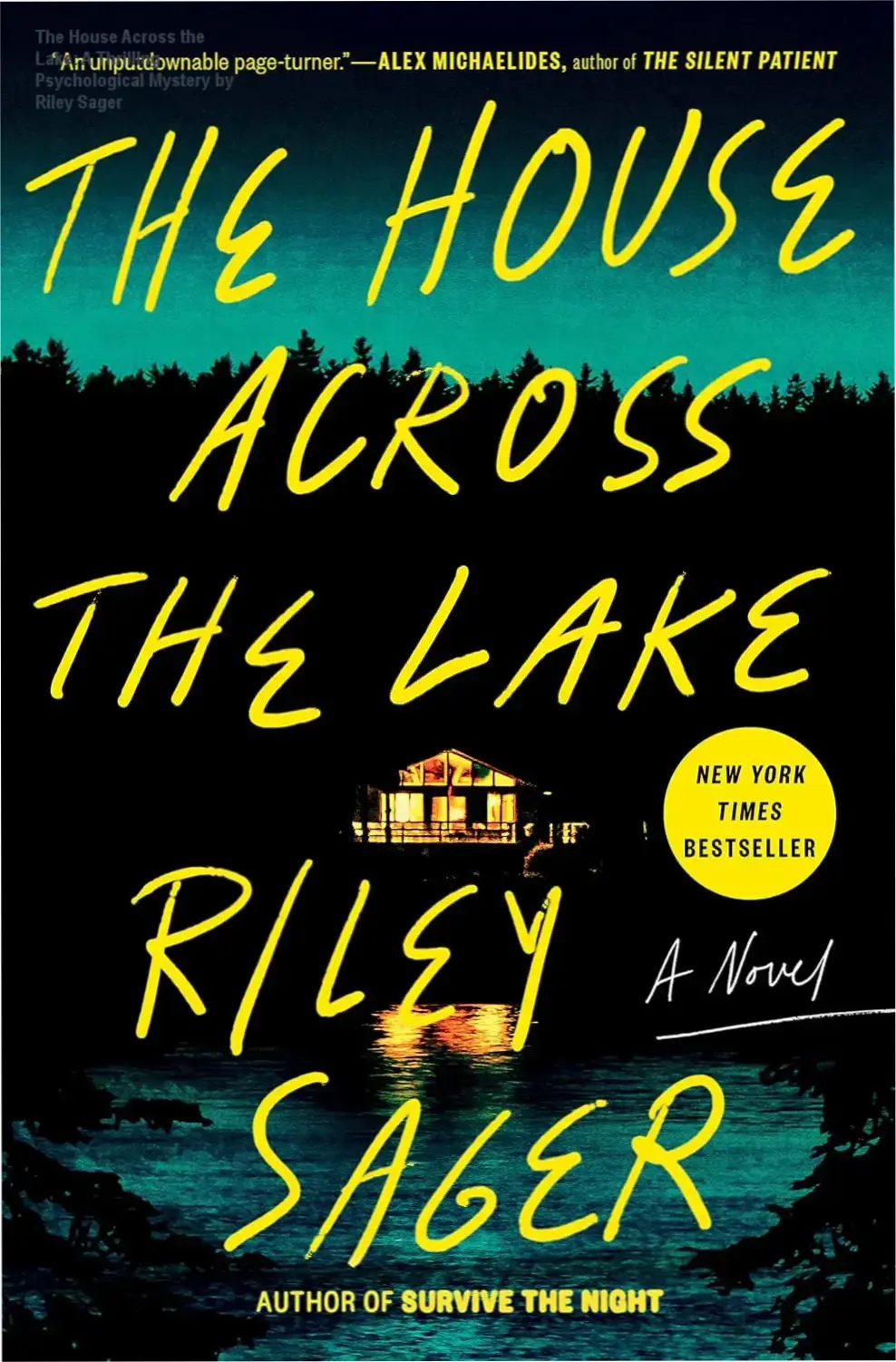
We all think we’d make great detectives when the stakes are fictional. We watch the true-crime docs, we predict the killer by episode two, and we judge the neighbors through the curtains with a sense of moral superiority. Riley Sager’s The House Across the Lake weaponizes that exact impulse. It hands you a pair of binoculars and a damaged protagonist, Casey Fletcher, then dares you to look away. The setup is classic rear-window noir: a washed-up actress, a glamorous couple across the water, and a drowning that kicks off a friendship built on lies. But Sager isn’t just playing greatest hits. He’s deconstructing the “girl on the train” trope while simultaneously delivering a masterclass in misdirection. If you want to see how the pieces fit before the final hammer blow, check the current edition and reader reception here.
The novel landed as an instant New York Times bestseller and an Editors’ Pick for Best Mystery & Thriller. That market reception matters because it signals a book that satisfies the casual beach reader and the plot-mechanic obsessive simultaneously. Sager’s previous hits (Final Girls, Survive the Night) established a brand: high-concept hooks, breakneck pacing, and third-act rug pulls. This one leans harder into the psychological domestic suspense lane, swapping the slasher vibes for something quieter, boozier, and far more claustrophobic. The Vermont lake setting isn’t backdrop; it’s a pressure cooker. The isolation forces intimacy, and intimacy breeds the kind of secrets that sink marriages and careers.
Ready to dive into “The House Across the Lake”?
Explore available editions, check current live pricing, or download a free sample directly on Amazon.
Preview Free Sample & Check Price on Amazon
*You will be redirected to Amazon. As an Amazon Associate, we may earn from qualifying purchases.
Writing Style & Pacing: The “One More Chapter” Engine
Sager writes in short, punchy sentences. It’s a deliberate stylistic choice designed to accelerate eye movement. You don’t read this book; you consume it. The chapters often end on a micro-cliffhanger—a knock at the door, a text message notification, a sudden realization about a timeline. It creates a propulsion that feels effortless until you realize it’s 2 AM.
The prose is unpretentious. No lyrical flourishes slowing down the machinery. This frustrates literary fiction purists on Goodreads who crave “beautiful writing,” but it thrills thriller readers who want narrative velocity. The first-person present tense (“I watch,” “I drink”) locks you inside Casey’s foggy, bourbon-soaked head. It’s an unreliable narrator technique done right: she’s unreliable because she’s drunk and grieving, not because the author is cheating.
Pacing follows a distinct three-act structure disguised as a slow burn. Act One is atmospheric setup. Act Two accelerates the friendship and the suspicion. Act Three goes fully off the rails in the best way. Several Reddit threads in r/thrillerbooks noted the “slow start” as a feature, not a bug. The quiet build makes the violent gear shift in the final 80 pages hit harder. One verified Amazon reviewer called it “a masterclass in the slow boil.”
Narrative Structure & The Twist Economy
Let’s address the elephant in the room: the twist. Sager’s brand lives or dies by the reveal. The House Across the Lake delivers a structural pivot around the 60% mark that recontextualizes everything prior. Without spoiling: the genre shifts. Hard. What reads as a domestic thriller morphs into something adjacent to Gothic horror or a specific sub-genre of psychological suspense.
This polarization is visible in the data. The Goodreads rating sits at 3.6 (484k+ ratings), while Amazon averages 3.9. That gap usually indicates a divisive ending. Readers expecting a grounded, realistic whodunit feel betrayed by the supernatural/heightened elements introduced late. Readers treating it as a “ride” love the audacity. I land in the latter camp. The clues are fair-play. Sager hides them in plain sight using Casey’s alcoholism as a narrative smokescreen.
The structure relies heavily on the “watchers watching watchers” dynamic. Casey watches the Royces. We watch Casey. The reader becomes complicit in the voyeurism. It’s a meta-commentary on the true-crime obsession the book satirizes. The binoculars are a literal Chekhov’s Gun; they appear in chapter one and dictate the POV limitations for the first half.