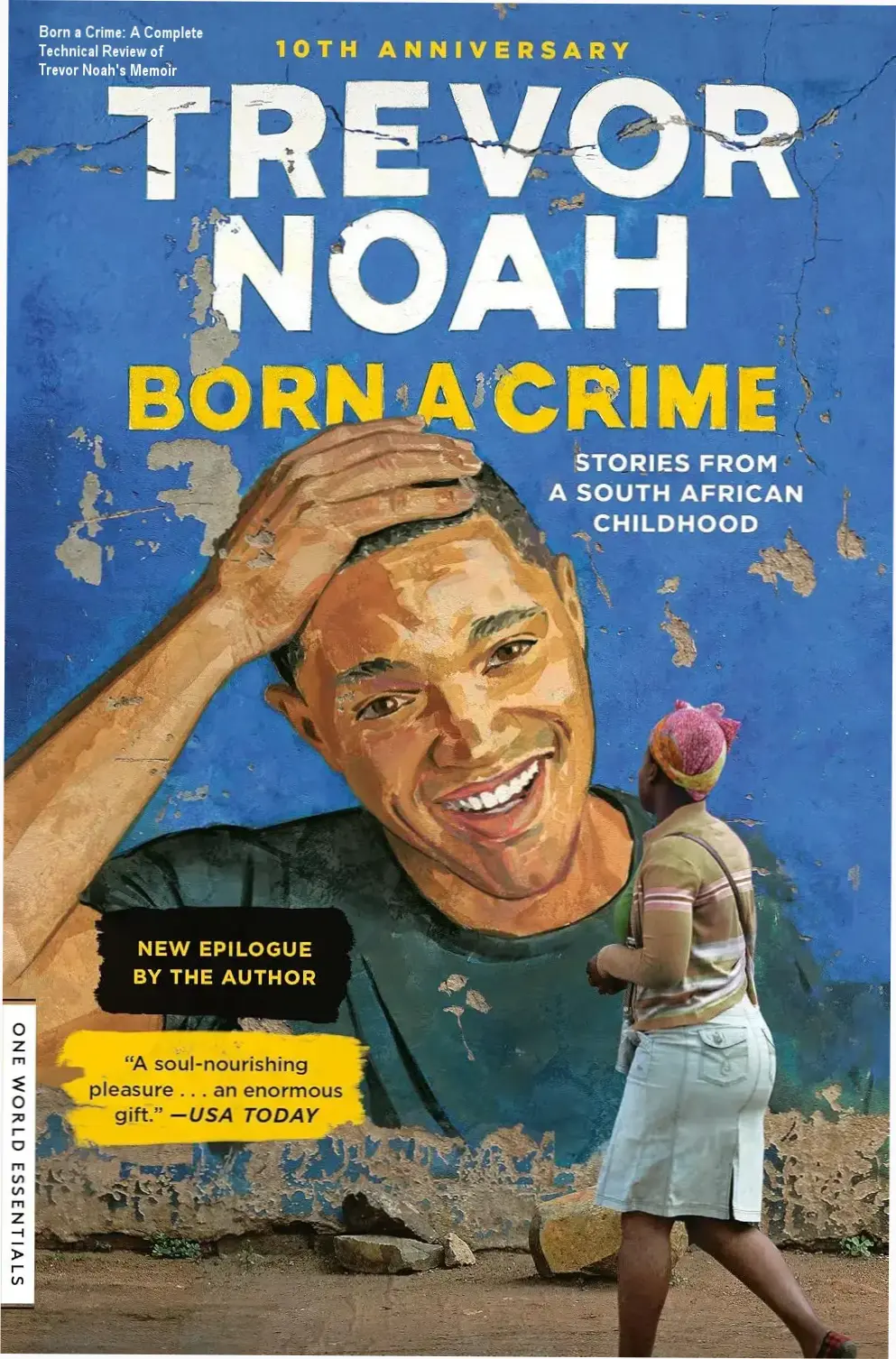
How does a human being find humor in a world designed to erase their very existence? Most people approach memoirs expecting a linear, perhaps even somber, recount of hardship. We often assume that stories about systemic oppression must be heavy, monochromatic, and emotionally draining to be “important.”
However, the challenge isn’t just surviving a brutal regime; it’s maintaining your sanity and sense of self when the law itself deems your birth a crime. Trevor Noah’s narrative shatters the expectation of a typical political memoir by blending sharp, observational comedy with the visceral reality of life under apartheid. If you want to see how laughter can be used as a tool for survival, you can check the availability of this bestseller on Amazon and see why it has captivated millions.
Ready to dive into “Born a Crime: Stories from a South African Childhood”?
Explore available editions, check current live pricing, or download a free sample directly on Amazon.
Preview Free Sample & Check Price on Amazon
*You will be redirected to Amazon. As an Amazon Associate, we may earn from qualifying purchases.
The Architecture of Wit and Trauma
The most striking element of Noah’s writing is the pacing. He doesn’t just tell you about the absurdity of apartheid; he makes you feel the tension of a child hiding in a room to avoid being “discovered” by authorities. The prose moves with the rhythm of a stand-up set—quick, punchy, and incredibly observant—but it never trivializes the danger.
One moment you are laughing at his childhood attempts to navigate racial boundaries, and the next, you are confronted with the terrifying reality of his mother’s courage in protecting him. This oscillation between hilarity and heartbreak is what prevents the book from feeling like a history lecture or a purely tragic memoir. It is high-octane storytelling that respects the reader’s intelligence.
The Unsung Hero: The Mother Figure
While the book is titled after Trevor’s circumstances, many readers on Goodreads and Reddit point out that the real protagonist is his mother. She is portrayed not as a victim of her circumstances, but as a rebellious architect of her son’s future. She used religion, unconventional discipline, and sheer willpower to ensure he didn’t succumb to the cycle of poverty and violence prevalent in South Africa at the time.
This thematic pillar elevates the book from a simple collection of anecdotes to a profound study of maternal strength and cultural resistance. The relationship between mother and son serves as the emotional anchor that holds the disparate stories together, providing a sense of continuity amidst the chaos of a changing nation.
| Feature | Analysis |
|---|---|
| Narrative Tone | A masterful blend of comedic wit and searing social commentary. |
| Complexity | Accessible language with deep socio-political implications. |
| Pacing | Fast-moving episodic structure that maintains high engagement. |
| Core Theme | Survival through identity, humor, and unconditional love. |
Expectation vs. Reality
If you go into this book expecting a dry political treatise on the end of apartheid, you will be surprised by how personal it feels. Conversely, if you expect only lighthearted comedy, you may find yourself unexpectedly moved to tears. The reality is that Noah uses his personal “crime”—his mixed race—as a lens through which we see the entire absurdity of institutionalized racism.
The book avoids the trap of being “preachy.” Instead of telling you why apartheid was wrong (which is self-evident), he shows how it functioned through the eyes of someone who was never supposed to exist under its rules. This “show, don’t tell” approach is why even readers who aren’t typically fans of memoirs find this book compelling.
Practical Takeaways for the Reader
Beyond the entertainment value, there are significant psychological insights offered here regarding resilience. We see how perspective acts as a shield. By finding humor in the absurdities of his upbringing, Trevor Noah was able to navigate a world that was constantly trying to define—and limit—him.
- Resilience through Humor:** Understanding how laughter can act as a coping mechanism during extreme adversity.
- The Power of Identity:** Navigating life when you don’t fit into any established social category.
- Cultural Literacy:** A visceral understanding of South African history that goes beyond textbooks.
Final Verdict
Is it worth your time? Absolutely. Whether you are reading for historical context or pure entertainment, “Born a Crime” delivers on both fronts. It is rare for a book to achieve such massive commercial success (over one million copies sold) while maintaining such high critical acclaim across diverse platforms like NPR and The New York Times.
“Trevor Noah’s childhood stories are told with all the hilarity and intellect that characterizes his comedy, while illuminating a dark and brutal period in South Africa’s history that must never be forgotten.” — Esquire
Target Reader Profile & Value Assessment
This memoir is not a dry historical textbook, nor is it a standard celebrity autobiography designed for superficial fan service. It occupies a unique intersection between sociopolitical commentary and personal comedy. The ideal reader is someone who appreciates narrative non-fiction that uses humor as a survival mechanism to tackle heavy themes like systemic racism, identity crises, and generational trauma.
If you are looking for a lighthearted, escapist read to unwind without any emotional weight, you might find the subject matter jarring. The transition from hilarious childhood mischief to the brutal realities of South African apartheid can be abrupt. However, for those interested in understanding the human element behind historical shifts, the value proposition is immense. You aren’t just reading about Trevor Noah; you are gaining a visceral perspective on how institutionalized segregation shapes individual psychology.
Common Purchasing Missteps
- Expecting a “How-To” Guide: Despite its wit, this is a collection of stories, not a manual on overcoming adversity or navigating social politics.
- Underestimating the Emotional Depth: Do not go into this expecting purely comedic relief. The “crime” of his birth carries heavy consequences that the book explores with unflinching honesty.
- Assuming it’s purely political: While the backdrop is political, the heart of the book is the relationship between a mother and her son. It is fundamentally a story of familial resilience.
Quick Contextual FAQ
| Question | Answer |
|---|---|
| Is it strictly autobiographical? | Yes, it focuses on Noah’s formative years in South Africa. |
| What is the tone? | A complex blend of sharp wit and profound tragedy. |
| Is it easy to read? | Extremely. Noah’s prose is conversational and highly engaging. |
Editorial Conclusion
Born a Crime succeeds because it refuses to sanitize the past. It manages to make the reader laugh at the absurdity of injustice while simultaneously demanding respect for the resilience required to survive it. It is an essential read for anyone wanting to understand the nuances of identity in a post-apartheid world. To see how this title stacks up against other contemporary memoirs, you can check current reader reviews on Amazon.
Final Editorial Verdict
We also recommend checking the official Kindle sample and reader ratings before making your final purchase decision.
*You will be redirected to Amazon. As an Amazon Associate, we earn from qualifying purchases.