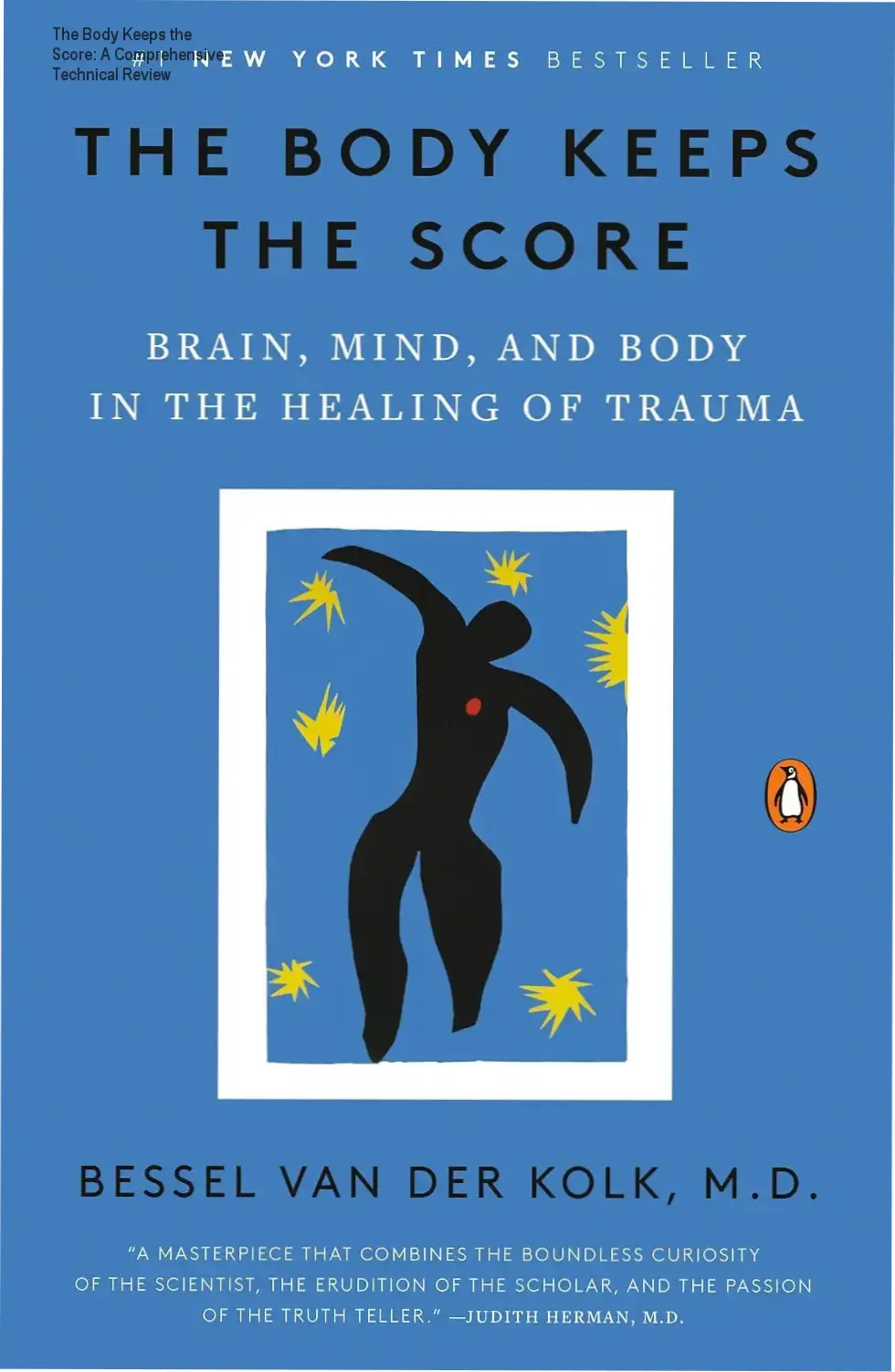
We often treat trauma as a memory—a mental file stored in a cabinet, waiting to be retrieved. We assume that if we can just talk through our past, the ghosts of what we endured will finally vanish. But what if the past isn’t just a thought? What if it is a physical reality etched into your very nervous system, dictating how your heart beats and how your brain reacts to stress?
Dr. Bessel van der Kolk challenges this misconception head-on. He argues that trauma is not just a psychological event; it is a physiological one that reshapes the brain’s architecture. For anyone feeling “stuck” in patterns they cannot explain, understanding this biological imprint is the first step toward reclamation. You can explore the latest editions and reader reviews here to see why this text has become a cornerstone of modern mental health discourse.
Ready to dive into “The Body Keeps the Score”?
Explore available editions, check current live pricing, or download a free sample directly on Amazon.
Preview Free Sample & Check Price on Amazon
*You will be redirected to Amazon. As an Amazon Associate, we may earn from qualifying purchases.
The Neurobiology of Survival
Van der Kolk’s primary argument is both revolutionary and terrifying: trauma changes the body’s “alarm system.” When you experience extreme stress, your brain’s ability to process information shifts. The prefrontal cortex—the logical part of your brain—often goes offline, while the amygdala—the fear center—becomes hyper-reactive.
This explains why survivors often react to minor triggers with full-body panic. It isn’t “in their head”; it is in their biology. The book meticulously bridges the gap between clinical observation and neuroscientific data, showing how trauma compromises the capacity for pleasure, trust, and self-regulation.
Beyond Talk Therapy: The Path to Neuroplasticity
One of the most significant shifts in this book is the critique of traditional “talk therapy.” While conversation is vital, Van der Kolk argues that talking alone often fails to reach the deeper, sensory parts of the brain where trauma resides.
He introduces a paradigm shift toward bottom-up processing. This involves treatments that engage the body to heal the mind, such as:
- Yoga and Mindfulness: Reconnecting with bodily sensations to regain a sense of safety.
- Neurofeedback: Training the brain to regulate its own electrical activity.
- EMDR (Eye Movement Desensitization and Reprocessing): Using bilateral stimulation to reprocess traumatic memories.
- Theater and Movement: Using creative expression to rebuild social connections and agency.
Reader Sentiment and Real-World Impact
The reception of this book has been massive, evidenced by its presence on the Amazon Charts and its staggering number of ratings. On platforms like Goodreads and Reddit, readers frequently describe this book as “life-changing” or “the missing piece of my healing journey.”
However, some readers find the technical scientific explanations dense. It is not a light read for a Sunday afternoon; it is a heavy, often emotional journey through clinical studies and patient histories.
| Feature | Analysis |
|---|---|
| Scientific Rigor | Extremely High. Based on decades of clinical practice and neuroimaging research. |
| Readability | Moderate. Requires focus due to scientific depth and emotional intensity. |
| Practicality | High. Offers concrete alternative therapies beyond traditional psychotherapy. |
Expectation vs. Reality
Many enter this book expecting a simple self-help guide on “how to be happy.” The reality is much more profound and much more difficult. This is an anatomical study of human suffering as much as it is a guide for recovery.
The book doesn’t offer quick fixes or “positive thinking” platitudes. Instead, it offers something far more valuable: validation. It validates that the physical sensations you feel—the tightness in your chest, the sudden urge to flee—are logical biological responses to past experiences.
The Verdict for the Modern Reader
Is this book worth your time? If you are looking for a superficial manual on coping mechanisms, look elsewhere. But if you want to understand the deep connection between your history and your biology, this is essential reading.
“Trauma reshapes how we perceive the world… It changes our ability to feel safe in our own skin.” — A core sentiment throughout Van der Kolk’s work.
For clinicians, it provides a much-needed neurological framework for treatment. For survivors, it provides hope through the concept of neuroplasticity—the scientific proof that because our brains can change for the worse, they can also be trained to change for the better.
Who Should Read This and Who Should Skip It
The Body Keeps the Score is not a casual weekend read. It is a heavy, scientifically dense, yet deeply human exploration of how trauma physically alters the human nervous system. If you are looking for a “quick fix” or a self-help manual with 10 easy steps to overcome stress, this is not that book. You will likely find the depth of neurological detail frustrating if you only want superficial advice.
However, for mental health professionals, clinicians, or survivors seeking a profound understanding of why their bodies react to triggers in ways their minds cannot control, this is essential. Van der Kolk bridges the gap between clinical neuroscience and the lived experience of trauma, making it a cornerstone for anyone serious about trauma recovery and neuroplasticity.
- The Ideal Reader: Therapists, psychology students, social workers, and survivors looking for a biological explanation for their psychological symptoms.
- The Skeptical Reader: Those expecting a simplified “how-to” guide rather than a deep dive into brain scans and physiological responses.
- The Common Misstep: Approaching this book during an acute period of emotional distress without being prepared for the intense subject matter it covers.
Value for Money & Editorial Conclusion
At 464 pages, the density of information provides immense value per page. Van der Kolk doesn’t just state that trauma is harmful; he demonstrates how it reshapes the amygdala and the prefrontal cortex. The investment in this book pays off through its holistic approach—discussing everything from yoga and mindfulness to neurofeedback as viable therapeutic pathways.
While some may find the transition between clinical case studies and neurobiological theory slightly jarring, it is necessary to build his argument. This is a foundational text that changes the paradigm from “what is wrong with you?” to “what happened to you?” If you want to understand the intersection of biology and biography, this remains a gold standard in the field.
Final Editorial Verdict
We also recommend checking the official Kindle sample and reader ratings before making your final purchase decision.
*You will be redirected to Amazon. As an Amazon Associate, we earn from qualifying purchases.