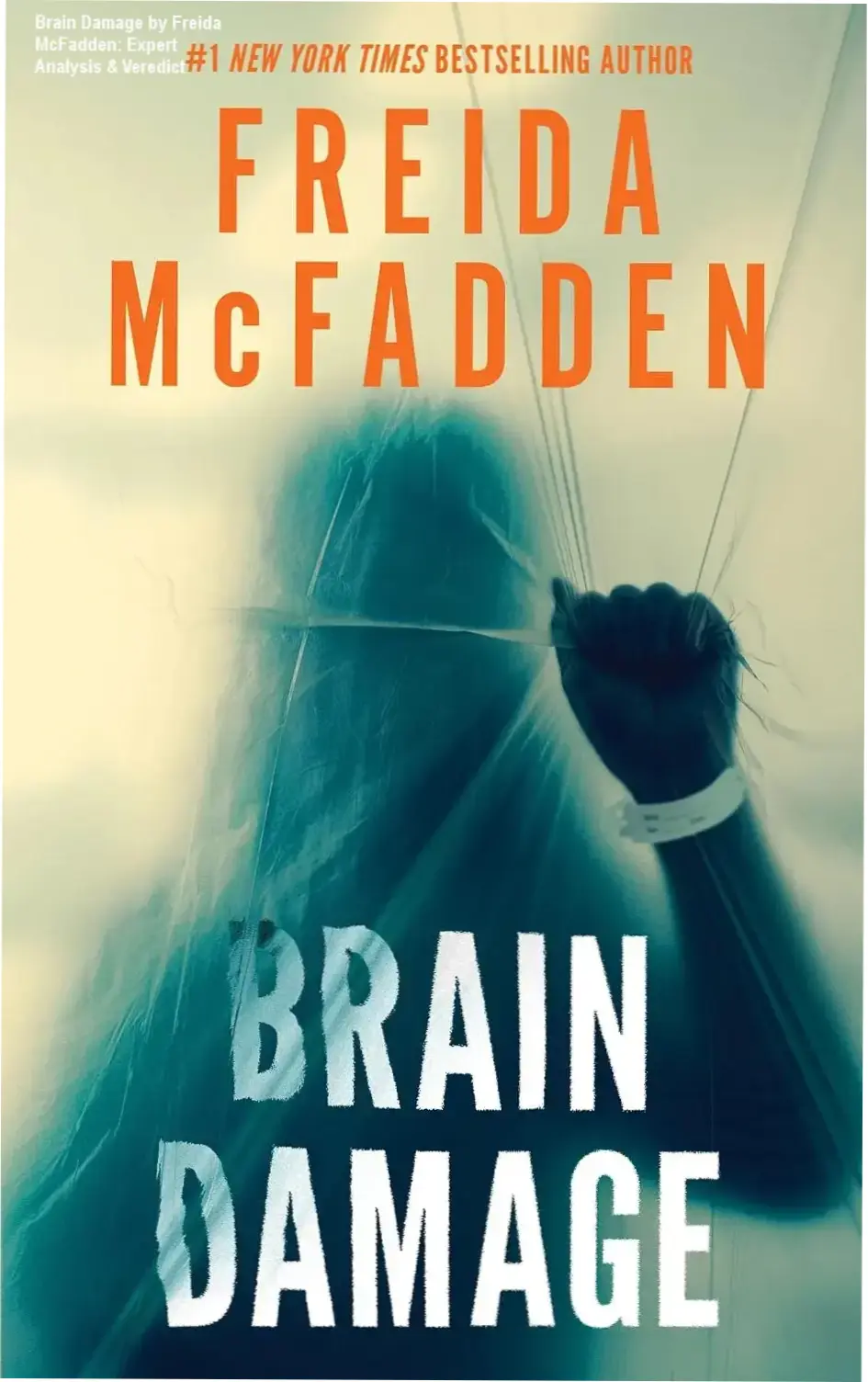
We like to think our memories are a vault. A secure record of who we are, who loves us, and who might want us dead. Brain Damage by Freida McFadden takes that comforting illusion and shreds it in the first chapter. The premise is brutally simple: a successful dermatologist takes a bullet to the head, survives, but loses the map to her own life. What follows isn’t just a mystery; it’s a masterclass in unreliable narration where the detective is the victim, and the evidence is locked inside a broken brain.
McFadden has cornered the market on “airport thrillers you actually respect in the morning.” With nearly 100,000 ratings on Amazon alone, she understands the modern reader’s attention span. We want short chapters. We want twists that land like a physical blow. We want the satisfaction of a puzzle solved without the flab of literary pretension. This book delivers exactly that, stripping the psychological thriller down to its studs: trust, identity, and the terrifying fragility of perception. It hits the sweet spot between commercial pacing and a genuinely clever structural gag.
Ready to dive into “Brain Damage”?
Explore available editions, check current live pricing, or download a free sample directly on Amazon.
Preview Free Sample & Check Price on Amazon
*You will be redirected to Amazon. As an Amazon Associate, we may earn from qualifying purchases.
The Architecture of Amnesia: Pacing as a Weapon
McFadden doesn’t write chapters; she writes traps. The average chapter length hovers around three to four pages. This isn’t an accident. It mimics the protagonist Charly’s fragmented attention span. You finish a chapter, hit a cliffhanger, and turn the page because the cognitive load is near zero. It is the literary equivalent of potato chips—engineered for consumption.
But speed isn’t the only tool. The timeline fractures. We oscillate between “Now” (the rehab facility) and “Then” (the months leading up to the shooting). This dual timeline does heavy lifting. It builds dramatic irony. We know *that* she gets shot. The tension comes from *how* and *who*. The past chapters aren’t backstory; they are forensic evidence. Every innocuous conversation in the “Then” timeline becomes a suspect motive in the “Now.”
Readers on Goodreads frequently cite the “one-sitting read” factor. One verified reviewer noted, “I started at 10 PM and finished at 3 AM. The chapters are so short you just keep saying ‘one more.'” That is the McFadden signature. She respects the reader’s time but demands their focus. The pacing masks the complexity of the plot mechanics. You don’t notice the gears turning because the train is moving too fast.
The Unreliable Narrator: A Feature, Not a Bug
Charly McKenna is not unreliable because she lies. She is unreliable because her hardware is damaged. Traumatic brain injury (TBI) strips away the filter. She confabulates. She misidentifies faces. She forgets conversations five minutes after having them. This is a brilliant narrative constraint. It forces the reader to do the detective work in real-time alongside the protagonist.
You cannot trust Charly’s eyes. When she sees a “kind” nurse, is the nurse kind? Or is Charly projecting safety onto a threat? When her husband appears devoted, is he grieving? Or performing? The TBI turns every interaction into a Rorschach test. This elevates the book above standard “who dun its.” It becomes a meditation on epistemology—how do we know what we know when the knower is broken?
Discussion threads on r/thrillerbooks often debate the medical accuracy. Some neuro-nurses chime in to say the rehab depiction is “Hollywood accurate”—compressed timelines, dramatic breakthroughs. But most readers agree the *psychological* accuracy lands. The frustration, the grief for the lost self, the terror of the gap in memory—that rings true. McFadden worked as a physician. She knows the clinical reality but chooses the dramatic truth. It pays off.
Character Dynamics: The Husband, The Doctor, The Stranger
The cast is tight. Three men orbit Charly. Each represents a different flavor of danger.
Rob (The Husband): Handsome,
Ideal Reader Profile
This hits the sweet spot for fans of fast-paced domestic thrillers. If you devoured The Housemaid or Never Lie, the rhythm here feels familiar. Short chapters. Relentless pacing. An unreliable narrator you genuinely root for.
It works best for readers who prioritize plot momentum over prose style. The amnesia hook isn’t just a gimmick; it structures the reveals perfectly. You uncover the truth exactly as Charly does.
Perfect for a single sitting. Commutes. Weekend binges. Low friction, high payoff.
Who Should Skip It
Literary fiction readers will hate the functional prose. Sentences serve the plot, not the aesthetic. Character depth is sacrificed for twist velocity.
If you guessed the villain in The Housemaid by chapter three, this offers similar transparency. The “who” matters less than the “how.”
Readers needing logical police procedurals will roll their eyes. Convenience drives the climax. Suspension of disbelief is mandatory.
Value Proposition
Paperback pricing sits standard for mass-market thrillers. Kindle version often drops below $5. That’s the smart buy. Re-read value is near zero—twists lose power instantly.
Library loan is the financially optimal move. Buy only if you collect McFadden or need a guaranteed page-turner for travel. The physical edition feels disposable; thin pages, standard glue binding.
Audiobook narration elevates the confusion factor. Hearing Charly’s fragmented thoughts adds texture the text lacks. Worth the credit if you subscribe.
Common Buying Missteps
Expecting a medical thriller. The dermatology background is window dressing. Zero technical depth. It’s a relationship thriller wearing a lab coat.
Assuming the “brain damage” mechanic is scientifically rigorous. It’s a narrative device. Memory returns on a plot schedule, not a neurological one.
Buying the hardcover at full price. Wait for the paperback remainder or digital deal. The content doesn’t justify premium formatting.
Contextual FAQ
Is it a sequel? No. Standalone. Zero connection to previous McFadden titles.
Graphic violence? Moderate. The opening shooting is visceral. Aftermath focuses on psychological terror, not gore.
Romance subplot? Minimal. The husband dynamic is central but toxic. No meet-cutes.
Satisfying ending? Yes. Definitive closure. No cliffhangers. The “knockout punch” marketing copy is accurate.
Editorial Summary
Brain Damage delivers exactly what the cover promises: a competent, high-velocity psychological thriller. It doesn’t transcend the genre but masters its mechanics. McFadden understands her lane perfectly—accessible, twisty, instantly engaging. The amnesia framework tightens the usual mid-book sag. Pacing is the product here. For the target audience, it’s a bullseye. For skeptics, it’s forgettable fast food. Check current reader sentiment and live pricing here.
Final Editorial Verdict
“Brain Damage” delivers on its core promise for its intended audience, offering compelling insights without fluff. As highlighted in our detailed edition breakdown, its practical depth and readability are its greatest strengths.

Related Posts