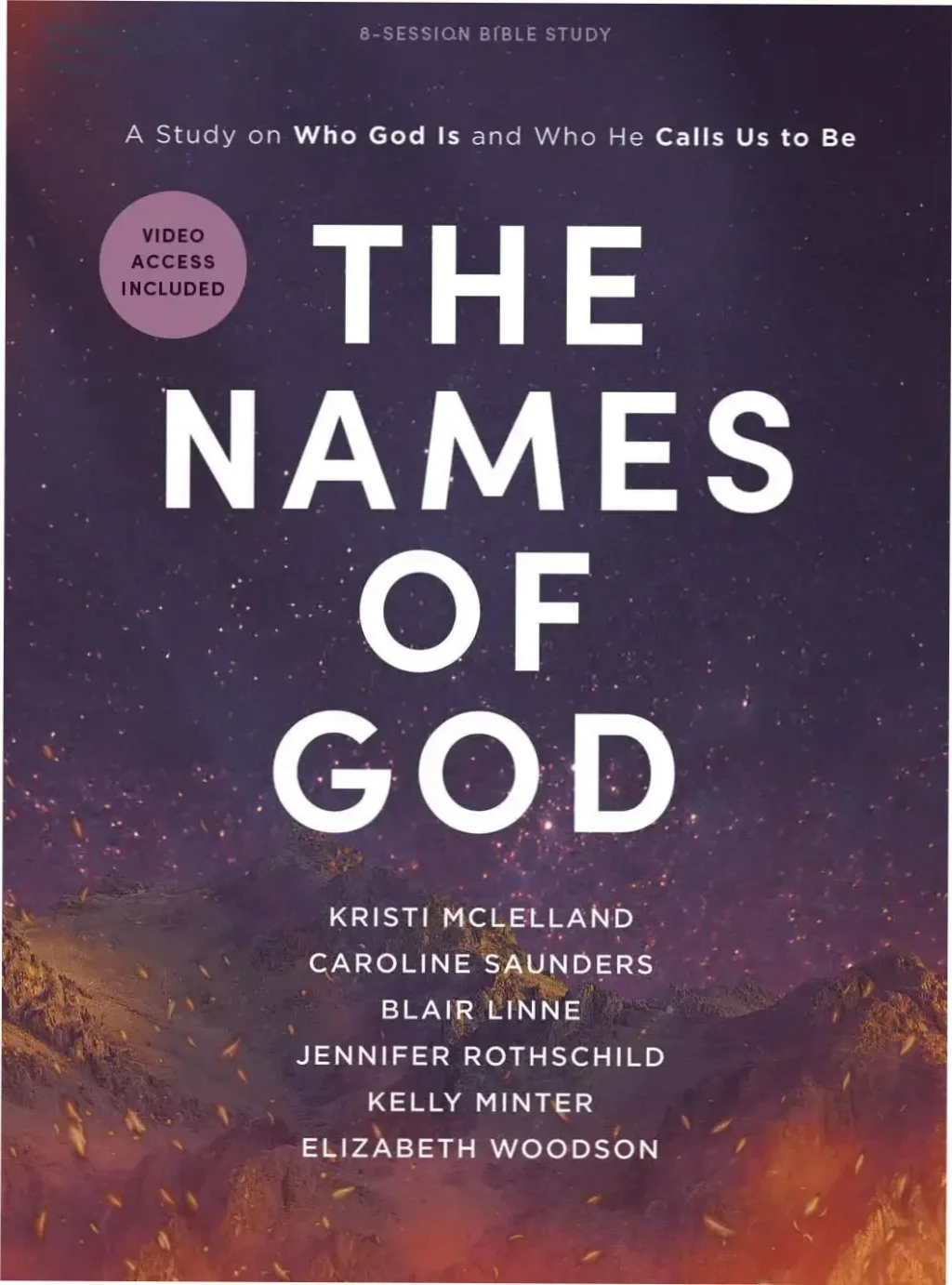
Many people approach their spiritual life like a distant relationship, treating the concept of God as a vague, monolithic entity or a set of rigid rules. This disconnect often leads to a plateau in faith where reading the Bible feels like a chore rather than a conversation. The struggle isn’t a lack of willpower, but a lack of intimacy—a failure to understand the specific character traits behind the titles we use in prayer.
The “The Names of God” study attempts to dismantle this distance by treating the names of the Divine not as mere labels, but as windows into His nature. Whether you are a seasoned theologian or someone returning to faith after years of silence, the expectation is usually the same: a desire to move from a theoretical knowledge of God to a felt experience of His presence. You can check the current reader reception and availability on Amazon to see how this specific approach resonates with other women facing similar spiritual hurdles.
In a market saturated with “feel-good” devotionals, this program positions itself as a hybrid between a classroom and a sanctuary. By combining written study with video sessions, it targets the modern learner who needs both the silence of a book and the guided voice of a teacher to truly grasp complex theological concepts like the Trinity.
Ready to dive into “The Names of God”?
Explore available editions, check current live pricing, or download a free sample directly on Amazon.
Preview Free Sample & Check Price on Amazon
*You will be redirected to Amazon. As an Amazon Associate, we may earn from qualifying purchases.
The Multi-Teacher Dynamic: Cohesion or Chaos?
One of the first things a skeptical reader notices is the author list. Six different teachers—Kristi McLelland, Caroline Saunders, Blair Linne, Jennifer Rothschild, Kelly Minter, and Elizabeth Woodson—contribute to this study. Usually, this is a red flag for inconsistency.
However, the structure here mimics a curated seminar rather than a fragmented book. Each teacher is assigned a specific “domain” of the Trinity or a specific biblical era. This prevents the narrative from feeling repetitive.
The pacing is deliberate. It doesn’t rush into the New Testament. Instead, it builds a foundation in Genesis with Elohim and Yahweh before transitioning into the persona of the Father, the Son, and the Spirit. This chronological and thematic layering ensures that the reader isn’t just memorizing names, but understanding the evolution of God’s revelation to humanity.
From a pedagogical standpoint, this variety is a strength. Different voices appeal to different learning styles—some are more academic, others more emotional, and some more practical. This diversity keeps the 224 pages from feeling monolithic.
| Feature | Technical Detail | User Value |
|---|---|---|
| Total Sessions | 8 Comprehensive Modules | Structured growth over 8 weeks |
| Video Content | 8 Videos (31-52 mins each) | Visual and auditory reinforcement |
| Study Length | 224 Pages / 7 weeks personal study | Deep dive without being overwhelming |
| Core Focus | The Trinity (Father, Son, Spirit) | Comprehensive theological overview |
The Hybrid Experience: Does Video Actually Add Value?
Many “video-enhanced” books are just glorified commercials or repetitive readings of the text. In this case, the videos serve as the “lecture” while the book serves as the “lab.”
The sessions, ranging from 31 to 52 minutes, provide a layer of nuance that text often lacks. For instance, the panel conversation in Session One sets a relational tone that makes the subsequent academic study of names feel more personal.
The inclusion of spoken word elements from Blair Linne is a clever touch. It breaks the monotony of standard teaching and engages the reader’s emotions, which is critical for a study focused on “intimacy” with God.
Critically, the redemption code system is a friction point. If you lose the book or the code doesn’t work, the value proposition drops significantly. But when it works, the synergy between the written prompts and the video insights creates a high-retention learning environment.
Theological Depth vs. Accessibility
The “learning curve” here is gentle but rewarding. The study doesn’t assume you have a degree in Hebrew, but it doesn’t treat you like a child either. It takes you from the “God who sees me” (El
Who This Study Is Actually For
This isn’t a casual read for a Sunday afternoon. It is a structured curriculum designed for women who prefer a multi-sensory learning experience over a traditional textbook.
It is ideal for those who thrive on a mix of video instruction and written reflection. If you are a small group leader looking for a “plug-and-play” system to guide a discussion without spending hours on preparation, this is a high-efficiency choice.
Who Should Probably Skip This
If you are searching for a rigorous, academic linguistic analysis of Hebrew and Greek etymology, look elsewhere. This is a devotional study, not a seminary dissertation.
You should also skip this if you have a strong aversion to video-based content. While the paperback is functional on its own, the core value proposition is tied to the redemption code and the teaching sessions.
The Value Equation: Is It Worth It?
On the surface, you are buying a 224-page paperback. In reality, you are paying for curated access to six different biblical teachers. It is essentially a condensed seminar in book form.
The most common purchasing mistake is treating this as a standard book. If you buy it and ignore the 8-session structure or fail to redeem the videos, you are leaving roughly 50% of the product’s value on the table.
Editorial Verdict: Realistic Expectations
The strength of this study lies in its balance. It manages to cover the breadth of the Trinity—Father, Son, and Holy Spirit—without becoming overly dense. It shifts the focus from “what this name means” to “how this name changes my current situation.”
It requires a time commitment (roughly two months). If you have the discipline for a scheduled study, the ROI in terms of spiritual growth and group cohesion is high. To see how other users have integrated the videos into their routine, you can check the latest verified buyer reviews on Amazon.
Final Editorial Verdict
“The Names of God – Bible Study for Women with Video Access” delivers on its core promise for its intended audience, offering compelling insights without fluff. As highlighted in our detailed edition breakdown, its practical depth and readability are its greatest strengths.
We also recommend checking the official Kindle sample and reader ratings before making your final purchase decision.

Related Posts