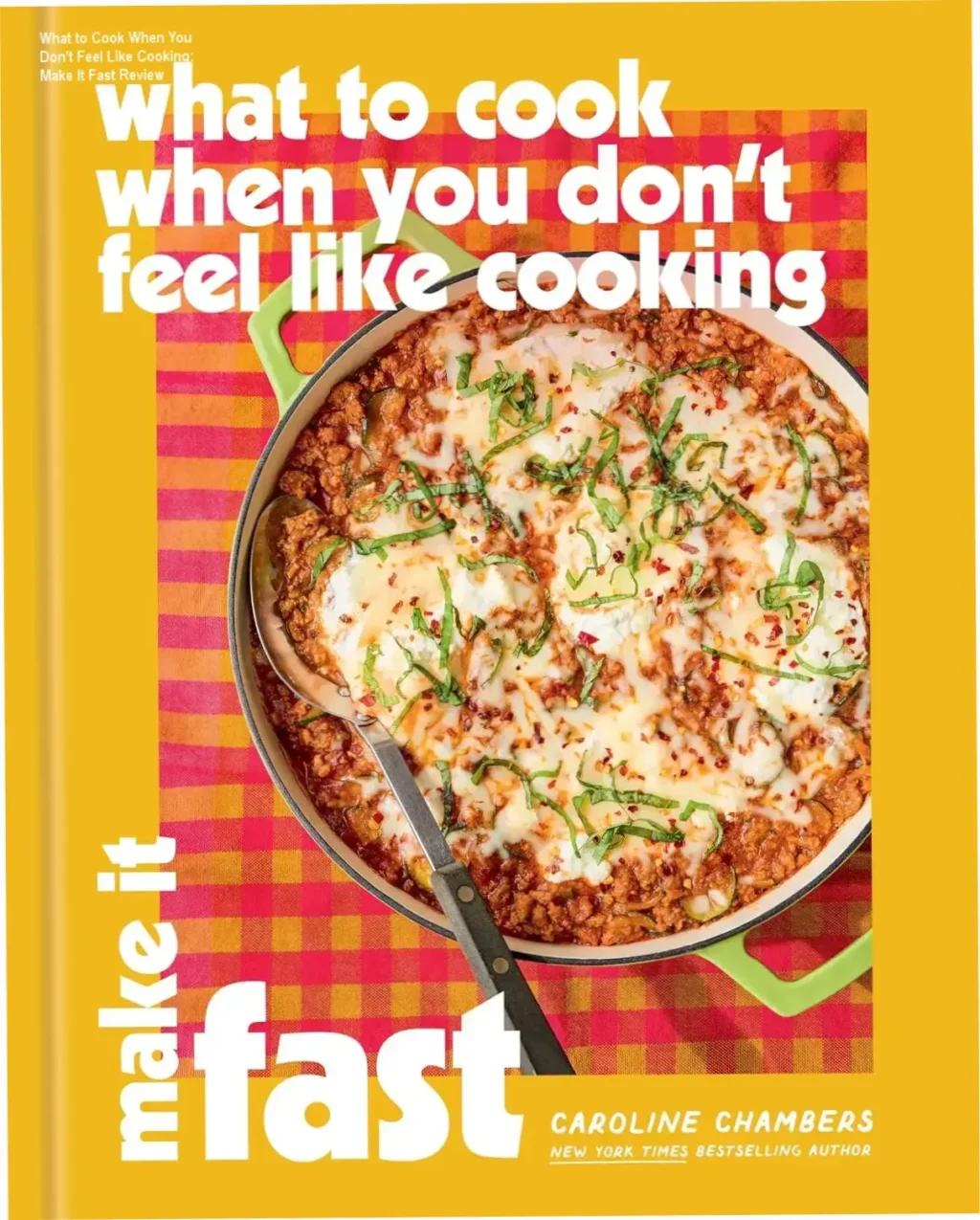
The nightly “what’s for dinner” spiral isn’t just about hunger. It’s decision fatigue crashing into a dirty kitchen at 6:47 PM. Most cookbooks promise salvation but deliver ingredient lists requiring a specialty grocery run and a two-hour cleanup. Caroline Chambers built a Substack empire by admitting she hates cooking, too. Her first book proved that low-effort doesn’t mean low-flavor. This follow-up doubles down on the only metric that matters on a Tuesday: hands-on minutes.
Chambers understands the gap between “30-minute meals” marketing and reality. That timer usually starts after the onions are diced and the chicken is pounded. She caps total active work at 30 minutes, chopping included. The structure is ruthless: recipes sorted by 15, 20, and 30-minute windows. You buy What to Cook When You Don’t Feel Like Cooking: Make It Fast because you need a system, not just a list of ideas.
Ready to dive into “What to Cook When You Don’t Feel Like Cooking: Make It Fast”?
Explore available editions, check current live pricing, or download a free sample directly on Amazon.
Preview Free Sample & Check Price on Amazon
*You will be redirected to Amazon. As an Amazon Associate, we may earn from qualifying purchases.
Voice and Writing Style: Your Competent Friend
Chambers writes like she’s standing next to you at the counter. No chef-speak. No “finishing with a drizzle of extra virgin.” She says “dump in the beans” and “smash the garlic.” The headnotes are short. They explain *why* a swap works or where the flavor bomb hides. This isn’t performative writing. It’s instructional design disguised as chat.
Readers on Goodreads consistently highlight the “Caro’s Corner” tips. These aren’t filler. They are troubleshooting nodes. “Swap flank for skirt.” “Use frozen corn if fresh is trash.” “This sauce doubles as a salad dressing.” That density of utility per page is rare. It respects the reader’s intelligence and their limited bandwidth.
The tone strikes a difficult balance. It’s encouraging without being saccharine. It acknowledges that some nights you only have 15 minutes and a bag of frozen shrimp. The “Mood Index” in the back — “I cannot chop a single thing” — proves she lives in the same reality as the buyer.
Structure and Usability: Built for the Panic Moment
The three-chapter time-gate (15/20/30 min) is the skeleton. The indexes are the nervous system. Searching by protein (ground beef, tofu, rotisserie chicken) solves the “what do I do with this pack in the fridge” problem. Searching by vibe (“Impressing Someone,” “Feeding a Crowd,” “Zero Chop”) solves the mental load problem.
Anchor recipes are the hidden MVP. One base — say, a spicy tomato broth — spins into five distinct dinners. Ramen one night. Shakshuka adjacent the next. Braised beans after that. This teaches pattern recognition. You stop following recipes and start cooking. Verified
Who This Book Is Actually For (And Who Should Skip It)
This book hits a specific sweet spot: the competent home cook who is time-poor but flavor-hungry. If you know how to hold a knife but dread the 45-minute active prep on a Tuesday, Chambers is your person. The recipes assume a baseline pantry—soy sauce, olive oil, dried spices—but don’t demand obscure ingredients.
Ideal buyer: Parents juggling bedtime, shift workers needing dinner now, or anyone suffering from decision fatigue. The “anchor recipe” system (one base, five spins) is genuinely clever for batch-prepping components on Sunday.
Skip it if: You want “dump-and-go” slow cooker meals. These require active stove management. You chop, you sear, you stir. The “30 minutes hands-on” claim holds up if your knife skills are decent; beginners should add 10–15 minutes. Also, strict meal-preppers might find the “serve immediately” focus limiting—leftovers exist, but the textures shine fresh.
Value Proposition: Hardcover vs. Digital
At 272 pages, the physical book feels substantial—Union Square & Co. did a solid job on paper stock and binding. It lays flat-ish after a few cracks. The index-by-ingredient and index-by-mood (“Can’t Chop,” “Impress Someone”) are surprisingly usable in print.
However, the Kindle edition wins for kitchen utility. Searching “chicken thighs” or “no chop” while standing at the fridge beats flipping pages with floury hands. Given the reference-heavy nature (swaps, riffs, indexes), digital searchability adds real daily value.
Common Buying Missteps
- Expecting “30 minutes total”: It’s 30 minutes active. Some marinades or rice cooking add passive time.
- Assuming low-sodium/health focus: This is flavor-first cooking. Butter, schmaltz, fish sauce, and salt run heavy. Adjust down if needed.
- Buying for baking: Zero desserts. Zero breads. Pure savory dinner focus.
Quick FAQ
Do I need the first book? No. Zero recipe overlap. This stands alone, though the first book covers more “lazy” pantry pastas.
Vegetarian friendly? Roughly 30% vegetarian mains, many more adaptable via the swap notes. Not a veggie-centric book, but not hostile either.
Metric measurements? Yes, weights and volumes both listed. Major plus for precision.
Bottom line: This is a high-utility tool, not a coffee-table trophy. If you cook dinner 4+ nights a week and hate the mental load, the ROI is immediate. You can check current reader photos and live pricing here to see real-world results.
Final Editorial Verdict
“What to Cook When You Don’t Feel Like Cooking: Make It Fast” delivers on its core promise for its intended audience, offering compelling insights without fluff. As highlighted in our detailed edition breakdown, its practical depth and readability are its greatest strengths.
We also recommend checking the official Kindle sample and reader ratings before making your final purchase decision.
*You will be redirected to Amazon. As an Amazon Associate, we earn from qualifying purchases.